




BKMT READING GUIDES
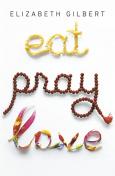

Eat, Pray, Love: One Woman's Search for Everything Across Italy, India and Indonesia
by Elizabeth Gilbert
Paperback : 400 pages
15 clubs reading this now
215 members have read this book
Elizabeth Gilbert’s Eat Pray Love touched the world and changed countless lives, inspiring and empowering ...
Introduction
The 10th anniversary edition of one of the most iconic, beloved, and bestselling books of our time from the bestselling author of City of Girls and Big Magic, Elizabeth Gilbert.
Elizabeth Gilbert’s Eat Pray Love touched the world and changed countless lives, inspiring and empowering millions of readers to search for their own best selves. Now, this beloved and iconic book returns in a beautiful 10th anniversary edition, complete with an updated introduction from the author, to launch a whole new generation of fans.
In her early thirties, Elizabeth Gilbert had everything a modern American woman was supposed to want—husband, country home, successful career—but instead of feeling happy and fulfilled, she was consumed by panic and confusion. This wise and rapturous book is the story of how she left behind all these outward marks of success, and set out to explore three different aspects of her nature, against the backdrop of three different cultures: pleasure in Italy, devotion in India, and on the Indonesian island of Bali, a balance between worldly enjoyment and divine transcendence.
Excerpt
I wish Giovanni would kiss me.Oh, but there are so many reasons why this would be a terrible idea. To begin with, Giovanni is ten years younger than I am, and, like most Italian guys in their twenties, he still lives with his mother. These facts alone make him an unlikely romantic partner for me, given that I am a professional American woman in my mid-thirties, who has just come through a failed marriage and a devastating, interminable divorce, followed immediately by a passionate love affair that ended in sickening heartbreak. This loss upon loss has left me feeling sad and brittle and about seven thousand years old. Purely as a matter of principle I wouldn't inflict my sorry, busted-up old self on the lovely, unsullied Giovanni. Not to mention that I have finally arrived at that age where a woman starts to question whether the wisest way to get over the loss of one beautiful brown-eyed young man is indeed to promptly invite another one into her bed. This is why I have been alone for many months now. This is why, in fact, I have decided to spend this entire year in celibacy. ...
 view entire excerpt...
Discussion Questions
From the Publisher:Gilbert writes that “the appreciation of pleasure can be the anchor of humanity,” making the argument that America is “an entertainment-seeking nation, not necessarily a pleasure-seeking one.” Is this a fair assessment?
After imagining a petition to God for divorce, an exhausted Gilbert answers her phone to news that her husband has finally signed. During a moment of quietude before a Roman fountain, she opens her Louise Glück collection to a verse about a fountain, one reminiscent of the Balinese medicine man’s drawing. After struggling to master a 182-verse daily prayer, she succeeds by focusing on her nephew, who suddenly is free from nightmares. Do these incidents of fortuitous timing signal fate? Cosmic unity? Coincidence?
Gilbert hashes out internal debates in a notebook, a place where she can argue with her inner demons and remind herself about the constancy of self-love. When an inner monologue becomes a literal conversation between a divided self, is this a sign of last resort or of self-reliance?
When Gilbert finally returns to Bali and seeks out the medicine man who foretold her return to study with him, he doesn’t recognize her. Despite her despair, she persists in her attempts to spark his memory, eventually succeeding. How much of the success of Gilbert’s journey do you attribute to persistence?
Prayer and meditation are both things that can be learned and, importantly, improved. In India, Gilbert learns a stoic, ascetic meditation technique. In Bali, she learns an approach based on smiling. Do you think the two can be synergistic? Or is Ketut Liyer right when he describes them as “same-same”?
Gender roles come up repeatedly in Eat, Pray, Love, be it macho Italian men eating cream puffs after a home team’s soccer loss, or a young Indian’s disdain for the marriage she will be expected to embark upon at age eighteen, or the Balinese healer’s sly approach to male impotence in a society where women are assumed responsible for their childlessness. How relevant is Gilbert’s gender?
In what ways is spiritual success similar to other forms of success? How is it different? Can they be so fundamentally different that they’re not comparable?
Do you think people are more open to new experiences when they travel? And why?
Abstinence in Italy seems extreme, but necessary, for a woman who has repeatedly moved from one man’s arms to another’s. After all, it’s only after Gilbert has found herself that she can share herself fully in love. What does this say about her earlier relationships?
Gilbert mentions her ease at making friends, regardless of where she is. At one point at the ashram, she realizes that she is too sociable and decides to embark on a period of silence, to become the Quiet Girl in the Back of the Temple. It is just after making this decision that she is assigned the role of ashram key hostess. What does this say about honing one’s nature rather than trying to escape it? Do you think perceived faults can be transformed into strengths rather than merely repressed?
Sitting in an outdoor café in Rome, Gilbert’s friend declares that every city—and every person—has a word. Rome’s is “sex,” the Vatican’s “power”; Gilbert declares New York’s to be “achieve,” but only later stumbles upon her own word, antevasin, Sanskrit for “one who lives at the border.” What is your word? Is it possible to choose a word that retains its truth for a lifetime?
Suggested by Members
Weblinks
| » |
Publisher's Book Information
|
| » |
Publisher's Reading Guide
|
| » |
Author Elizabeth Gilbert's web site
|
Notes From the Author to the Bookclub
Interview with the author, from the publisher: The realization that you did not want to have children serves as a turning point in the reevaluation of your life that led to divorce. Later you quote Virginia Woolf—“Across the broad continent of a woman’s life falls the shadow of a sword”—writing about a woman’s choice between convention and tradition versus “a far more interesting” yet “perilous” life. Do you think this is as true today for the modern, urban American woman? When modern American women make the deliberate choice not to have children they are still called upon to defend that choice, in a culture where motherhood is still regarded as the natural evolution of a woman’s life. But I remember my own mother musing once that she thought women had been “sold a bill of goods” during the 1970s, in terms of being promised that they could have everything simultaneously—family, career, marriage, privacy, equality, femininity, and autonomy. Reality has taught us that no woman can build an honest life without sacrificing something along the way. Deciding what will be sacrificed is not easy. But the good news is this: increasingly, that decision is ours. Joseph Campbell spent a lifetime studying myths from around the world, ultimately sketching the archetype of the hero as a protagonist who sets out on a journey that ends in personal—and spiritual—transformation. Do you see echoes of the hero’s tale (well, heroine’s) in your own story? Back when Campbell (whom I love, by the way) was teaching at Sarah Lawrence College, his female students would sometimes ask, “But what about the heroine’s journey? Don’t women get to participate in this universal questing epic?” Traditional world mythology, however, frankly replies: “Nope.” Women (as life bearers) have always been seen by mythmakers (men) as being automatically perfect for their task; they don’t need to transform. Well, I was never going to be a life bearer and was painfully yearning for the classically soul-changing quest. So throughout my journey, I definitely identified much more closely with the struggling hero archetype than with the self-possessed goddess archetype. Do you think travel necessitates personal growth because one is forced to respond to and accept the unfamiliar? In your opinion, how much does it depend on an individual’s willingness to embrace opportunity? No experience in this world has ever been cathartic without the willing participation of the individual. Life does not automatically bestow wisdom or growth upon anyone just for showing up. You have to work ceaselessly on your end to digest and imbibe your opportunities or, I have come to believe, they will gradually slip away and knock on someone else’s more receptive door. You have a strong distrust of antidepressants, portraying them as Western medicine’s easy answer to despair. In light of the experiences related in the book, do you now believe that seeking help when one needs it is a sign of courage and the first step on the road to healing? I actually have a great deal of respect for antidepressants; I think they can be enormously mighty tools toward recovery. What I question is the current notion that a little vitamin P is the only thing needed to restore a torn life. We are multifaceted beings, and if we are to heal our suffering we must address our wounds on every imaginable level, seeking help from as many sources as possible, not just from pharmaceutical companies. And, yes, that all begins with the brave admission that one is lost and wants to be recovered. You ended up structuring your book conceptually using japa mala—the beads used as an aid in many strands of Eastern meditation—as your model. This allowed you to tell your tale using 108 sections, divided into three groups of 36, your age at the time, with each group representing a different leg of your travels. How did you decide to use this device, and how difficult was it to remain faithful to this format? Brace yourself for the world’s hokiest answer: the idea came to me in meditation in India. The idea arrived fully formed. In one glorious instant I was shown a complete vision of how the book would be organized. This idea was a massive gift to me; the structure kept my storytelling in order, preventing me from rambling digressions. And the idea of the prayer beads kept me on topic emotionally, too, reminding me at every moment that this book was ultimately a spiritual exercise, an offering. How did you come to the decision to have your sister and, to a lesser extent, your mother serve as points of comparison for your own life? How could they not be comparisons? I think we all compare ourselves to our mothers and sisters, and, in my case, these are the two most influential women in my life—powerful and inspiring. And yet they’ve made markedly different choices than I have. But I witnessed this truth in them, too—that it was not without a certain level of sacrifice and struggle that they embraced motherhood and marriage. I learned a lot about my own ambivalence by studying theirs from every visible angle, using their experiences to teach me about myself. The personal encounters you have in Italy, India, and Indonesia seem to affect you deeply, and your guru’s philosophy clearly informs your own. Do you think that self-discovery requires the insights of others? What do you make of this paradox? I don’t see the paradox; I think sincere self-exploration requires the insight of everyone. One of my guru’s most helpful instructions is to “become a scientist of your own experience,” which I take as an invitation to explore every possible line of human spiritual thinking. The world has been blessed with some extraordinary teachers over history—use them! That said, studying can only take you so far. At some point you have to lay aside the books, hope that your mind has actually absorbed some wisdom, and just sit there in silence, letting your soul ascend to its own leadership. And that’s something nobody can do for you. Before you leave India, your poet-plumber friend from the ashram writes a few lines of verse as a good-bye. In his poem, he describes you as “betwixt and between.” Do you think one can remain continually betwixt and between or is there a point at which this approach to life would become a burden? Well, you don’t want to become a hunk of driftwood. When I was in India I ran into some travelers who’d never settled down, and they all had that look of tight madness around the eyes. What you do want to remain, though, whether you are traveling or not, is alert. Pay attention to the signals—is it time to lay down roots? Or time to go exploring again? As for me, I’ve come to trust the power of a lifelong quest; if you keep asking honest questions and keep giving honest answers, you will always be instructed clearly on what to do next, and when and with whom. (In other words: I’m happily and quietly living with my sweetheart, for the time being, in Philadelphia.) Eat, Pray, Love marks a point of departure from your previous work by focusing on your own life. Was it difficult for you to turn your talents to your own experience, revealing so much to readers about your internal life and personal journey? Oddly, I never thought of it as a particularly personal story. To me, the arc of the narrative felt completely universal—doesn’t everyone struggle with these same questions, doubts, and longings? So, no, it wasn’t difficult to write this. Though I do feel it would have been impossible not to write it. I was so consumed by questions that I needed the ordering process of writing to help me sort through them. As Joan Didion once said, “I write so I can learn what I think.” How important does that year in your life seem to you now? How important was the first breath you ever took the day you were born?Book Club Recommendations
Recommended to book clubs by 55 of 94 members.
Book Club HQ to over 90,000+ book clubs and ready to welcome yours.
Get free weekly updates on top club picks, book giveaways, author events and more