




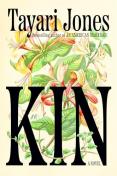
by Tayari Jones
Hardcover-
Click on the ORANGE Amazon Button for Book Description & Pricing Info


Overall rating:
How would you rate this book?
Member ratings
Kin, Tayari Jones-author; Angel Pean, Ashley J. Hobbs, narrators
This novel begins in Louisiana in the middle of the 20th century when the civil rights movement is in its infancy. It is the story of “cradle friends” Annie Kay Henderson and Vernice Irene Davis. Annie was raised by her grandmother who was very tired and very resentful, because she raised her own children, but now was forced to raise their children, as well. Vernice Irene Davis was raised by her unmarried, childless aunt, the only one available to raise her after her father murdered her mother Arletha Irene, and then himself. Neither little girl was truly wanted by the woman who was caring for them. It was an obligation that led to unintended consequences. Regardless of the sacrifices being made by the caregivers, neither cradle friend really appreciated their sacrifices.
The story begins in Honeysuckle, Louisiana and moves into Memphis, Tennessee and Atlanta, Georgia. It is about the different kinds of people that the cradle friends meet and the different walks of life they come from. The reader will meet, among others, Ola Mae and Miss Jemison, who live together in Honeysuckle, Babyface/Ruth Ann, Clyde, and Bobo Carver who run away to Memphis with Annie, , Joette Cunningham, Vernice’s very wealthy, lesbian roommate in Spelman College, Isaiah and Sweet, two homosexual men who know Hattie Lee who is the alcohol lover and missing mother of Annie, Franklin McHenry, a respectable, successful and kind lawyer from a good family, who takes a liking to Vernice, and Lurelia and her twin sister Lulabelle who owns a brothel and takes a liking to Annie. As the novel progresses, the reader is immersed in the racism of the south and the self-sufficient culture of the people of color. Vernice, a smart and pretty young girl, is ambitious with dreams of going to college. Annie, not as smart or pretty as Vernice, on the other hand, is obsessed with searching for the teenaged mother who left her within days of her birth. Vernice has far more self-confidence and self-respect. Their lives would travel in far different trajectories.
As they reveal their stories, we learn about the culture and atmosphere in the south during the 50’s and 60’s. Racism was rampant, and the Civil Rights movement was just beginning to make inroads. The sexual revolution was far into the future. The book presents an authentic picture of their lives, their problems and concerns. It explores upward mobility, class division, jealousy, greed, lying, friendship, gratitude, kindness, poverty, consequences, family relationships, betrayals, secrets, parenting, sexuality, sisterhood, motherhood, loyalty, infidelity, alcoholism, racism and other relationship and societal ills. It shines a light on the abuses of the “white” community, not sharing the bathroom facilities, requiring separate water fountains, schools, seating sections on trains and buses, and barring people of color from the restaurants, hotels, and neighborhoods they occupied, the very kinds of behavior that are forbidden today, but existed then with abandon and cruelty. Unfortunately, in all its negativity, this novel feels authentic and represents some really shameful behavior. Through these scenes, however, the resilience of these oppressed people shines, as they do what is necessary to survive under the yoke of the rampant racism.
This is a novel that explores the concept of dignity and kinship. Their definitions are complicated and varied. They alter our way of life. What about the idea of truth? Does one have to be true to oneself or others? Are some secrets and little white lies necessary? It is about loneliness with or without the connection and companionable attachment of others. The concept of family is important. It controls the characters. Is sexual confusion to be viewed as naïve, a sin or a state of being? Are some relationships rejected because society rejects them or because we choose to reject them? The book tackles same sex relationships in a time when they were hidden for fear of being shamed and/or shunned. There are many different kinds of love and they are all explored, some in greater detail than others. The book honestly approaches difficult ideas and behaviors that define a person.
Cradle friends Annie and Vernice are different in all ways, but still love each other. Each of them will make impulsive choices that will follow them and exact a toll. Do they learn from their mistakes or keep making the same ones over and over? Life in the south was far more difficult than it was in the north, but for them it was no bed of roses in either place. Vernice and Annie always had to look over their shoulder for fear of offending a white person, often for actions they never exhibited, but were accused of committing. The picture of black life, black on black, black on white, and passing for white feels very authentic and is a heartbreaking presentation of racist behavior that one hopes is not prevalent today. This is an honest portrayal of life and death, racism and elitism, the rich and the poor. The author has injected an occasional bit of the supernatural with visions and haints, superstition and religious fervor, but they feel perfectly appropriate.
Book Review: Kin – A Story of a Mother’s Love and Lifelong Influence
Kin is a moving and heartfelt novel that beautifully explores how a mother's love—or the absence of it—shapes a person's relationships, decisions, and identity throughout life. The story shows that the bond between a mother and child has a lasting influence, affecting not only childhood but also the way people love, trust, forgive, and face challenges as adults.
One of the strongest messages in the novel is that a mother's care provides emotional security and guidance. The characters who experience the loss or absence of their mothers struggle with feelings of loneliness and uncertainty, yet they continue searching for love, acceptance, and belonging. Their experiences demonstrate that a mother's influence remains powerful, even when she is no longer physically present.
This book was very confusing during the first chapter and I was unable to focus to the rest of the book.
I found that the book was hard to follow. I also think chapter 1 was so slow moving that it made me lose interest quickly. Also, I found one character's story to be more interesting than the other. Lastly, it is definitely not a novel that I would read again.
Book Club HQ to over 90,000+ book clubs and ready to welcome yours.
Get free weekly updates on top club picks, book giveaways, author events and more