



by Sharon Kurtzman
Hardcover- $25.74
Click on the ORANGE Amazon Button for Book Description & Pricing Info


Overall rating:
How would you rate this book?
Member ratings
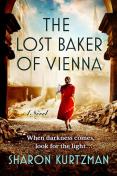
The Lost Baker of Vienna: A Novel, Sharon Kurtzman, author and narrator; Rachel F. Hirsch, narrator.
This author used her own family’s experiences during the war, and their history, to form the basis of this book. Her background is similar to that of Zoe Rosenzweig in her novel. Both were the grandchildren of Holocaust survivors with similar horrific experiences, but this is a novel in every other sense of the word. Still, the author truly illustrates the danger of being a Jew in Europe, and elsewhere, even after living through the barbaric treatment of the Nazis. That indeed, was a monumental achievement, since half of the entire Jewish population had been murdered. Some of the names the author uses are the same as those of her own family members, and they were indeed trapped in Europe, had lived in Vienna, were sent to the ghettos mentioned and then to the Concentration Camps. They also used the organizations mentioned to enable their escape. Their suffering was universal to all Jews involved. Sadly, as with all of the books I have read on the Holocaust, no matter how many, there are always new horrors to discover, and this book is no exception.
In the novel, Zoe Rosenzweig’s parents were killed in an accident when she was very young. Her very loving grandparents raised her. She grew really close to her grandfather, and when he died, she was totally alone and bereft. However, he left her a letter and some interesting items. As she explored and cleaned out his home, she became aware of some phone calls between him and someone in Austria. Could she have any living relatives that she had not known of before? Through her investigation, she learns a great deal about her family and how they survived through the war years. Until then, she had only known sketchy information about how they had managed. She learns that the years after the war for her family were in many cases as brutal as those they had only so recently survived. Zoe begins to learn far more about her grandfather Aaron’s sister, Chana, his mother, and their lives during and after the war.
Survival was first and foremost for everyone, and they each tried to gain the advantage. Chana was described as having chutzpah and his mother, Ruth, was described as only being interested in protecting her family and getting them to safety. The more modern Zoe, in the present time, was searching for information on her family that had largely been kept from her, ostensibly to protect her from its horror. She was also hoping to write a story about them that would advance her career. Often, I felt the portrayal of their overall behavior painted them in a somewhat negative light, rather than only a sympathetic one. They were, after all, forced by circumstances to do things that were sometimes very unsavory, in order to simply make it from day to day. It was not their typical behavior. I found the plight of the Jews well presented, however, illustrating their abuse, fear, disappointment, sadness, hopes and desires, but also their enormous effort to reclaim and rebuild their lives, including the finding of love and safety.
Regarding the story, I was aware of the fact that the Jews were often unwelcome in their former homes because those that stole them actually had the nerve to believe they were still entitled to them. I also knew that there were still so many who held to the Nazi ways and hate. There were so many Nazis, still alive and well, just waiting to continue their brutalization of these innocent people. I also knew that many women were forced to compromise themselves to survive, even after they were freed from the Concentration Camps, but I don’t think I was as aware of how important the black market had become to their survival. Still, one does what one has to when the choice is being beaten, murdered, accused of crimes they did not commit, being homeless, or forced back into displaced person’s camps. They were barred from entry into most countries, so they remained pariahs, always in danger; they were forced to deal with the black market. No one escaped from the war without loss or grief, deprivation or fear.
In the end, it was a story that reveals the horrors that continued to destroy the lives of many Jews after the war ended, and perhaps, it even flies in the face of those misguided citizens who support Nazi-like figures today. There are few books written about the Jews after the war and how they managed to continue to live in Europe, or for that matter, how they managed to get out of Europe to other countries. After the war’s end, they had to learn to navigate a world that still rejected them, and sadly, we are living in a world that today is beginning to do the same thing.
Unfortunately, the horrors are almost all but forgotten by most of today’s young, liberally educated students, who march in the streets with those who defend and call for the murder and/or annihilation of Jews and Israel. Their knowledge of history is deficient and their knowledge of current events is often skewed by propaganda and lies. Perhaps reading this book will enlighten some of them to the real plight the Jews have faced and continue to face today.
Book Club HQ to over 90,000+ book clubs and ready to welcome yours.
Get free weekly updates on top club picks, book giveaways, author events and more