




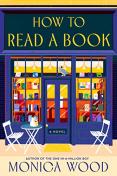
by Monica Wood
Hardcover- $25.20
"The perfect pick to really light a fire under my book club, and yours....A reminder that goodness, and books, can still win in this ...


Overall rating:
How would you rate this book?
Member ratings
How to Read a Book-Monica Wood, author
Frank Daigle’s wife Lorraine was killed by a drugged-up young teenager within hours of the time that she had announced to him that she was leaving him for another man. Lorraine, a retired teacher, had apparently not loved Frank with all her heart, although he had loved her with his. She wanted more than he could give and was going to get it. What followed for the Sixty-eight-year-old Frank were some offbeat thoughts about her murder, thoughts he was ashamed of because he was actually relieved that he would not have to reveal Lorraine’s infidelity to his “helicopter” daughter Kristy, their only child. Kristy was totally devoted to her “perfect” mother, of whom she was pretty much a carbon copy.
Frank was a retired machinist, and he now preferred to be left alone with his thoughts; he did not want a public court case; he did not want to have to reveal his wife’s betrayal to anyone else. However, he knew exactly what Kristy wanted; she wanted the guilty teen to pay dearly for taking her mother from her. A trial would follow. Soon, Frank was lonely, and quite by accident, he took a job working as a handyman at the local bookstore.
On the fateful night that took the life of Lorraine Daigle, Violet Powell was the teen who was driving the car that killed her. She had been running away with her 22-year-old, handsome and rich boyfriend. She blindly loved him with all her heart. She was just 19 and was thrilled that Troy had chosen her. He was not to be her hero, however, as she had hoped, rather he would lead to her downfall. He was the one who encouraged her to drive under the influence. He was the one who had plied her with the alcohol and drugs, but would he ever be blamed by her at the trial? She believed that she was guilty and needed to be punished. Although she had once been a “good” girl, she was now branded as “bad”. The fanaticism and hypocrisy of religion played a role in Violet’s upbringing. Her need for real affection and love would continue to influence her life and also her foolish choices going forward. When she was released from prison, she was 22 and still ridden with guilt and shame. Her family abandoned her and her search for employment was a failure. Then, suddenly, to her astonishment, she ran into "bookie", the book lady from the prison. Coincidentally, they were both at the local bookstore. Her life on the ”outs” took a different turn.
Harriet Larson was the book lady. She was a genuinely caring 64-year-old woman who had been married to Lou, a husband she was devoted and loyal to, but never really loved with all her heart. She conducted the book club for the women at the Maine correctional facility that Violet was sent to, to serve time and pay for her crime. A retired teacher, she sometimes broke little rules of the prison in order to better get to know the inmates and relate to them with compassion. She genuinely cared about them and for them, but this concern and interest in their welfare was frowned upon by the powers that be. Book leaders had come and gone because of the pettiness of the rules. The administration seemed far more concerned with punishment than rehabilitation. Actually, from this book, I got the impression that the entire justice system had evolved in that direction, unfortunately.
In the local bookstore, after what seemed like a disastrous and horrifyingly almost violent meeting of all three of these characters, they each recovered and rethought their initial reactions to each other. The young bookstore employees who witnessed the moment looked into Frank’s background and rallied around him. Harriet rallied around Violet, her former prison book club member. How would this seemingly innocent meeting work out? Their pasts had been fraught with emotion and pain.
Harriet had raised her niece, Sophie. Sophie was about to move away, leaving a hole in Harriet's life. A bit unwillingly, she helped Violet get a job in the parrot research lab of Dr. Mischa Petrov, where she currently worked. Violet could replace her. She took to the parrots like a duck to water, honestly enjoying the care and attention she needed to give them. She became entranced by the research and the professor. Her life seemed to improve.
As the story progresses, the author shows that love, true compassion, consideration and rehabilitation can be achieved. She also shows that we all break the rules sometimes, and while some infractions cause catastrophic results, some actually cause progress and change. The story shines a light on the sometimes unavoidable but simplistic reasons behind some events that result in crimes being committed. Perhaps a better more thoughtful and mature decision can prevent a tragedy, but on the other hand, some missteps do bring about positive changes. Using the parrots in the bird lab, the author shows that we are all innocent in some way, that we all make mistakes, that we all respond to patience and kindness. That we can all forgive, maybe not completely forget, but we can move on. Are we not all entitled to mercy? Would we not be better off if we tolerated each other’s shortcomings with compassion?
What is the actual purpose of our penal system? Are rehabilitation or redemption possible? Are we doomed to make the same mistakes over and over? Is true forgiveness possible? Is revenge satisfying? If we give ourselves time and patience, can we recover from loss and grief? Are marriages based on a combination of true love, personal need, and/or desperation? Is it possible to find true love at any age? Is there such a thing as kismet? Are there really second chances? Should those who enter the world of criminology have altruistic motives and not vindictive ones? Why are men in charge of female prison areas?
Blind love made Violet Larsen make a really foolish choice. She had been brought up in a sheltered life and was not at all worldly or aware of what demons were ready to strike. The work in the bird lab highlighted patterns of behavior and taught Violet that all creatures deserve respect and forgiveness.
Book Club HQ to over 90,000+ book clubs and ready to welcome yours.
Get free weekly updates on top club picks, book giveaways, author events and more