




BKMT READING GUIDES
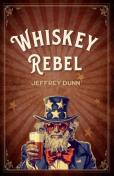

Whiskey Rebel
by Jeffrey Dunn
Paperback : 212 pages
0 club reading this now
0 members have read this book
While panning for gold, Iraq-war veteran Punxie Tawney meets Hamilton Chance, a barefoot, manic, obsessive drummer with a burning desire—to distill tax-free whiskey just like his forefathers ...
Introduction
A shell-shocked soldier returns home, questioning the very meaning of American freedom.
While panning for gold, Iraq-war veteran Punxie Tawney meets Hamilton Chance, a barefoot, manic, obsessive drummer with a burning desire—to distill tax-free whiskey just like his forefathers during the American Whiskey Rebellion of 1794. The two join forces, set up shop in the rugged high desert of Washington’s Columbia Basin, and begin producing Westcoulatum Good Goddamned 1794 Freedom Whiskey. But soon their alcohol-fueled idyll is disrupted by Cherry, a.k.a. the Aphrodite of Wenatchee, and her best friend Loyalhanna, a woman so traumatized by her past that she refuses to speak to men. Plus there’s the indigenous hustler, Sam the Man, and before long, out where “the rattlesnakes lie out in sage leaf bikinis,” the cast of quirky characters discovers that freedom is not a one-size-fits-all concept.
Drawing inspiration from the annals of U.S. history, Jeffrey Dunn's literary novel Whiskey Rebel paints a riveting portrait of characters left behind by the American dream, engaging readers in a thought-provoking tale about identity, freedom, and the ongoing pursuit of happiness.
Editorial Review
No Editorial Review Currently AvailableExcerpt
1. The True History of Sazerac2.
Because it’s easy to overlook another man’s faults when loneliness gnaws the soul, and since my options were the man in front of me, a red harvester ant down at my feet, or a buzzard high above my head, I chose the man who offered me his bottle. I was also curious about something the man said—“just as long as we don’t run into any de Milos”—but I saved that question for later. ...
 view entire excerpt...
Discussion Questions
From the author:Deep
1. Which character is of the most interest? Why do you think this is?
2. Would you like to visit the Columbia Basin? Why or why not?
3. What is your idea of the American Dream? Is there a character who shares your idea, and if so, in what way? If not, why?
Deeper
1. People love to argue over whether or not at the end of Bruce Springsteen’s “Thunder Road” Mary should climb into the singer’s car and head off into the sunset. What do you think of Punxie’s and Cherry’s romance? Do you think they have future? Should they be the subject of a sequel?
2. Whiskey Rebel opens as a simple buddy adventure book, and then things fall apart with the entrance of Cherry, Sam the Man, and Loyalhanna. What do each of the new characters teach our buddies? Did one of the characters give you pause to think, and if so, in what way?
3. People don’t write letters back and forth much anymore in the way Hamilton and Punxie do in the middle of Whiskey Rebel. What do these letters add to the development of them and the other characters? In this age of email and direct messaging, we have gained speed, but at what cost?
Deepest
1. By definition, complex trauma is the result of repeated trauma over time. All five of Whiskey Rebel’s major characters have experienced complex trauma in one way or another. How were the sources of complex trauma different for each character? How did the role of personality affect the way each character dealt with their trauma? What do you predict the future will hold for each character?
2. It has been said that serious writing engages with other works of literature, and to that end, Whiskey Rebel does this in two ways. On the one hand, Punxie offers the reader a running list of books and literary characters, and on the other hand, the librarian of Catacombs recommends three proto-to-radical feminist novels. How do you feel about the way the author used this technique in Whiskey Rebel? Do you sometimes follow up on the literary breadcrumbs that authors leave behind, and if so, in what way?
3. It could be said that Whiskey Rebel is not a historical novel; it is, in fact, a histories novel. Contained within are British, Native American, U. S. Labor, and Iraq War histories, not to mention the more specific history of the American Whiskey Rebellion of 1794, each told from different vantages. Is this a fair assessment, and what do so many histories say about our telling of American history?
Bonus
While reading Rachilde’s The Juggler, Punxie tells Cherry he doesn’t understand the line, “Women don’t write, they sign!” Her response is to cast Punxie and her in a dramatization. What does The Juggler, the dramatization, and Cherry teach Punxie about what he calls “the battle of the sexes.” What do you think about Cherry’s agitprop theatre and your own battle of the sexes?
Book Club Recommendations
Recommended to book clubs by 0 of 0 members.
Book Club HQ to over 90,000+ book clubs and ready to welcome yours.
Get free weekly updates on top club picks, book giveaways, author events and more