



BKMT READING GUIDES
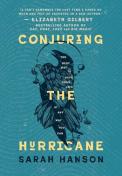

Conjuring the Hurricane: The Best Way to Save Your Life is Any Way You Can
by Sarah Hanson
Hardcover : 134 pages
0 club reading this now
0 members have read this book
When Sarah Hanson realized she had to leave her abusive relationship, she didn't have a plan. She had fear, instinct, and a ...
Introduction
"I can't remember the last time I cared so much, and felt so invested in a new author."–Elizabeth Gilbert, best-selling author of Eat, Pray, Love and Big Magic
When Sarah Hanson realized she had to leave her abusive relationship, she didn't have a plan. She had fear, instinct, and a body that had learned how to survive.
Conjuring the Hurricane is a survival memoir-in-verse about leaving a life that's killing you and rebuilding a self you can finally live inside. Told in fragments that mirror the way trauma lives in the body, the book traces the nonlinear work of reclaiming identity, trust, and agency after abuse.
This is a story of escape and aftermath, of learning to trust what the body knows, and of joy returning slowly, in unexpected forms. It is not a guide to the perfect exit, but a testament to the exit that saves you.
For anyone who has ever wondered how she got here.
For anyone who has ever whispered, how do I get out.
This book is a permission slip to choose survival.
PRAISE:
"Each of Hanson’s words pierce a part of you that you didn’t know needed prodding and leaves you changed; softer. This book will make you feel held. And seen."–Jennifer Pastiloff, best-selling author of On Being Human and Proof of Life
"Reading this will be a walk through hell, then a steep but steady climb into the sunlight. You’re going to feel terrified, stripped bare, then fully seen and wrapped in such love and joy."–Elizabeth Hara, Emmy-award winning writer for Marvel’s Moon Girl & Devil Dinosaur and Sesame Street
"For those who have wondered ‘What if?’-- let Sarah Hanson take you to the Church of How to Change Everything. Hanson's voice is generous and clear. I feel tended-to by this honest and necessary work. An astonishing joy."–Angela Janda, author of Small Rooms with Gods
"A stirring collection of poems about love’s destructive powers... Hanson deftly explores the overlapping and often contradictory emotions that can characterize a romantic endeavor."–Kirkus Reviews
"A powerful poetry collection… [that] names emotional maelstroms and practices tenderness... Iconoclastic and subversive."–Foreword Reviews
Editorial Review
No Editorial Review Currently AvailableExcerpt
My Father’s AngerI grew up in the hallways of my father's anger,
his mood a thermostat nobody could regulate.
We blistered in the heat of his rages,
we shivered in the absences of his affection;
we breathed as softly as possible in between.
He filled entire rooms with his grievances,
displayed trophies of his self-importance
on every shelf. We sat on sofas
of expectations, and hung portraits
of our obedience on the walls: one big, happy,
barely-breathing family, everybody looking
for a way out. My brothers and I grew
into adulthood, and my stepmother grew
a pancreatic tumor, so my father is alone now:
an old man with old ghosts, frequently getting
lost in the hallways that used to frighten us.
I do not visit very often, and when I do, I hold
my breath and hover over the couch cushions,
refusing to sink into the crater of his complaint.
I do not offer forgiveness and he doesn't ask,
and I do not apologize for the distance between us.
...
 view entire excerpt...
Discussion Questions
From the author - Added by Pauline:1. How does the memoir-in-verse format shape your experience of the story compared to traditional prose memoir? What does fragmentation capture that linear storytelling might miss?
2. The book resists neat victim/villain binaries. How did that complexity expand or challenge your thinking?
3. Where do you see generational trauma influencing adult relationship choices in the narrative?
4. The title suggests there is no single “right” way to leave harm. What does survival look like across different poems?
5. How does the body function as a site of memory and instinct throughout the book?
6. What role does female friendship and chosen family play in survival?
7. The author speaks of “self-permission.” What does that mean to you personally?
8. Which poem or image lingered with you most — and why?
Notes From the Author to the Bookclub
Thank you for reading Conjuring the Hurricane. Writing this book was both terrifying and liberating, and my hope is that these poems spark the same kind of truth-telling, reflection, and connection in your group. I’ve organized the questions by theme, so you can decide what topics best fit your group’s style and skip what doesn’t - choose your own adventure! May your conversation make space for both tenderness and strength. Please take care of yourselves and one another as you discuss these themes, and share only what feels right. Questions About the Book Itself * What poems or lines stayed with you, and why? Did a particular image, rhythm, or moment echo something in your own life? * How does Hanson use humor, wit, or sharpness to counterbalance pain? What purpose does humor serve in a narrative about survival? * This memoir-in-verse uses a braided structure instead of a linear one. How did that shape your reading experience? What does the form capture that a traditional memoir might not? * Which images or metaphors felt like anchors throughout the book? How do they help build the book’s emotional architecture? * How does the book resist neat categorization and moral binaries? What did that complexity open up for you as a reader? * How did the poetic form, such as fragmentation, line breaks, and white space, affect your understanding of trauma, memory, or healing? Survival & Escape * When have you recognized that surviving was no longer enough? How do you know when something needs to change? * What internal or external forces make leaving difficult, even when you know you should? * What survival strategies have you seen in yourself or others that deserve to be honored instead of judged? * What misconceptions exist about why people stay, and what does this book reveal about these misunderstandings?? Trauma & Reckoning * How does your body or memory carry difficult stories? In what ways did the book reflect your own experiences of remembering? * What does reckoning with the past look like for you? * How do you balance telling the truth with protecting yourself? Where is the line between vulnerability and overexposure? * How did the book’s nonlinear timeline mirror the way trauma lives in the mind?? Sisterhood & Grief * Who are the people who have carried you through grief or hardship? What did their presence make possible? * How do you show up for others when they are grieving? * What rituals or stories help you keep someone's memory alive? * What does the book suggest about the connection between grief and transformation?? Impermanence & Healing * When have you felt the truth that the best and worst days both end? How does impermanence guide your choices? * How has change, whether chosen or unchosen, shaped your own healing? * What daily practices help you stay rooted in hope, even when things feel uncertain? * How do the poems portray healing as nonlinear? Did that resonate with you?? Love & Rebirth * How has love, in any form, helped you reimagine your life after a difficult season? * What does it mean to begin again in a way that feels true? * Where does tenderness show up in your own healing? How do you offer it to yourself? How do you receive it? * How does the book challenge traditional ideas about acceptable timelines or forms of love? Reflection Prompts If your group wants a quieter moment for journaling, here are some prompts you can try: * Write about a time when you realized you were settling for breadcrumbs instead of what you truly needed. * Describe a friendship or community that made you feel most alive. * What truth are you still learning how to say out loud? * What part of your story are you beginning to reclaim? * What permission do you need most right now?Book Club Recommendations
Recommended to book clubs by 0 of 0 members.
Book Club HQ to over 90,000+ book clubs and ready to welcome yours.
Get free weekly updates on top club picks, book giveaways, author events and more