




BKMT READING GUIDES
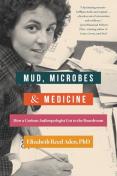

Mud, Microbes, and Medicine: How a Curious Anthropologist Got to the Boardroom
by Elizabeth Reed Aden PhD
Paperback : 352 pages
0 club reading this now
0 members have read this book
Elizabeth “Betsy” Aden, a twenty-something anthropology student, is clinging to academia as a ...
Introduction
For fans of The Immortal Life of Henrietta Lacks and Lab Girl, an arresting memoir that chronicles a young woman’s journey from remote island research to Big Pharma and the boardroom.
Elizabeth “Betsy” Aden, a twenty-something anthropology student, is clinging to academia as a safety net—until she’s offered a grant to spend the summer on a remote island in Melanesia, famously home to cannibals. Adventure calls, and Betsy doesn’t hesitate. Once she arrives, though, reality hits: no running water, no electricity, and no Western medicine. Inspired by her experiences, Betsy returns to school with a new perspective and changes her field from cultural anthropology to biomedical anthropology. Driven by a new purpose, she returns to Melanesia for two years to study the transmission hepatitis B and sets up an ingenious field laboratory to collect and test blood samples.
Back at home, resourceful and determined Elizabeth successfully navigates the complicated “boys club” of academia. She explores teaching and advertising and finds a fit in biotech from which she builds a career in Big Pharma. That choice, along with her tenacity and willingness to take risks, propels Elizabeth on a meteoric rise to the senior executive suite in a large Swiss company and into the boardrooms of scrappy biotech companies.
With electric detail and candid honesty, Mud, Microbes, and Medicine is a testimony of resilience and resolve in the face of challenges so large and unimaginable, you will wonder how Elizabeth’s story could even be true.
Editorial Review
No Editorial Review Currently AvailableExcerpt
Prologue: Freedom“Betsy, you have penis envy,” Paul informed me, quite seriously, one evening. Throughout the early days of our marriage, he constantly told me I was doing something wrong or what I said was stupid. This was the last straw. ...
 view entire excerpt...
Discussion Questions
From the author:First Impressions
1. The book opens with a young woman escaping a stifling marriage and landing on a remote Pacific island with very little idea of what she's gotten herself into. What was your first reaction to Betsy as a protagonist? Did you like her immediately, or did she grow on you?
2. Reviewers have called this book "eight delightful books fused into one." By the time you finished, which of its many stories — the anthropology, the child-rearing, the science, the corporate world, the political history of Vanuatu — surprised you most? Which did you enjoy the most?
3. The memoir uses humor throughout—how does this affect your engagement with serious topics?
Safari Barbie Meets Melanesia
1. Betsy's arrival in the New Hebrides has been described as a "culture shock"—she was unprepared for the physical and human reality of the island. What was the funniest or most cringe-worthy moment of her naïveté? Did it remind you of any fish-out-of-water experience in your own life?
2. Would you have taken the same leap into such an uncertain, physically challenging environment? Why or why not?
3. Betsy learns that fieldwork requires something clinical training doesn't teach: the patience for trust to be developed in order to solve a problem at a deeper, non-superficial, level.. Has there been a moment in your own life where you had to earn your way into understanding something, rather than simply study your way in?
4. What did you learn about the hepatitis B virus that surprised you?
The Science of Paying Attention
1. What did you learn about the hepatitis B virus that surprised you?
2. The hepatitis B breakthrough—understanding that transmission was happening through intimate everyday caregiving behaviors—came from watching how people actually lived, not from laboratory analysis alone. What does that discovery suggest about the limits of conventional scientific method? Does it change how you think about medical research? Did it change how you think about global health, scientific research in developing countries?
3. The book makes the argument that science without cultural context is blurry. Can you think of examples from your own experience — in healthcare or elsewhere — where the "official" answer missed something obvious to anyone actually watching people's lives?
4. Betsy's "Lessons Learned" sections end each chapter. Did you find them interesting? What lesson from the book would you add that she didn't?
Weblinks
| » |
Author's website
|
| » |
Reader's favorite Book Review
|
| » |
Literary Titan book review
|
| » |
For the Love of the Page Blog
|
Notes From the Author to the Bookclub
Author Q and A Q: The book opens with a young woman breaking out of a stifling early marriage and landing — somewhat improbably — on a remote Pacific island to study hepatitis B. Was there a single moment when you thought, "This is either the bravest thing I've ever done or the scariest?"? A:I focused on it being the scariest thing I’d ever done. Brave implies that you’ll survive—at the time, it wasn’t clear to me that I would. I had prepared for fieldwork in the abstract — the reading, the coursework, the planning — and then I stepped off the plane in what was then the New Hebrides looking like Safari Barbie. The gap between what I imagine and what I find can be enormous. I've learned to go with the flow and take advantage of the unexpected. Q: You've described your arrival in Melanesia as a culture shock. What specifically shocked you? Was there preparation could have prevented it? A: There was no one specific shock, but the aggregate was hard to navigate. I didn’t know the rules, everything looked different and was different. I could have benefited from more preparation on how to take and analyze blood samples, but that worked out in the end. What surprised me was how genuinely attached I became to these people, to the rhythms of life on Malo, to the ways a community holds itself together. Science asks you to maintain objectivity and anthropology asks you to become a participant observer—these are not mutually exclusive as I discovered. My best scientific insight from that fieldwork came precisely because I paid attention to the human texture of daily life and complemented my observations with data. Q: Tell us about that insight—the hepatitis B breakthrough. How did living on the island produce a finding that a conventional epidemiology study might have missed entirely? A: The question I was trying to answer was how chronic hepatitis B infection was being transmitted to infants on Malo—specifically, was there maternal transmission of the virus. The prevailing hypothesis was that infants were exposed to HBV during the birthing process and transplacental exposure. The answer turned out to be much more nuanced. Ironically, if I’d done just a statistical analysis of the data, I’d have supported the maternal transmission hypothesis. However, by spending time with the people and doing behavioral observations, I found exceptions to the established dogma and discovered an explanation that accounted for 100 percent of the cases! Anthropology gave me a better explanation that epidemiology alone couldn't. Science without attention to culture gets the big picture but misses the important details. Q: Your PhD mentor was, by your account, overbearing and manipulative. How much of this book is about learning to trust your own instincts over the authority of experts who were supposed to know better? A: I learned to follow my instincts and continually learn and adjust. Academia in that era — and I suspect in many eras — rewarded deference, especially from women. I am not naturally deferential since I grew up in an environment with dominant and successful people. I will admit when I’m wrong and make course corrections but I accept something as true because someone in authority said so. I also learned was when someone tells you that somethings impossible they are often describing the limits of their own imagination. My insight was that if I could define the problem then I could find a solution. These lessons served me in the field, in market research, biotech, in pharma, and eventually on the page. Q: The book covers your reinvention from field anthropologist to biotech entrepreneur to SVP of Global Pharmaceutical Strategy at Roche. Most people reinvent themselves once. You did it several times. Was there a throughline you recognized only in retrospect? A: I am a learning curve junkie who is addicted to the mind candy of curiosity. I love an intellectual puzzle. Anthropology taught me how to see and assimilate complex information, science gave me the skills to analyze it, and market research showed me how to communicate complex information visually. In Melanesia, the conventional wisdom about disease transmission was incomplete. In pharma, the regulatory environment allowed drug development to ignore genetic variation. I kept finding myself in rooms where the official answer was inadequate, which is uncomfortable but also clarifying. The throughline is something my step-father taught me: “Research is to see what everybody else has seen and to think what nobody else has thought” (Albert Szent-Györgyi—Nobel Laureate & discoverer of Vitamin C). Q: Reviewers have noted that this memoir resists the triumphalist gloss of most success stories. The loneliness, the bad judgment, the professional bruising are all there. Was that candor a deliberate choice, or just your nature? A: It was deliberate—I figured I have little to lose by being honest about fieldwork and others have much to gain by knowing that you can survive bad decisions, sketchy situations, and melancholy. Most accounts of living overseas, in the Peace Corps, Non-government Organizations, or anthropological fieldwork focus on the benefits and not the acculturation and difficulty of getting to that end. I also think readers, deserve to know that the people who appear to have figured it out were also, frequently, bewildered. The chapter-end "Lessons Learned" reflect what I learned, some of it not always good. Q: Jared Diamond called the book "eight delightful books fused into one fascinating autobiography." What are the eight books, would you say? A: I hadn’t thought about that until he mentioned it. There's the coming-of-age story, the anthropological fieldwork memoir, the political history of Vanuatu's independence, the scientific detective story of hepatitis B virus (HBV) transmission, the portrait of two marriages, an insider’s perspective on biotech and pharma, a primer of hassle-free childcare, and maybe a recognition on what it means to belong somewhere and then leave. Diamond was was right—the book doesn't fit neatly into one genre. My life hasn't either. Q: You witnessed Vanuatu's independence firsthand—a former French/British colony negotiating its own future. How did your experience there affect how you think about journalists and how news is reported? A: Profoundly and permanently. I discovered that “news photographs” can be manipulated and that each reporter I talked with after our interview with the leader of the rebellion had a different view of what we had experienced. I realized how very subjective “objective” reporting can be and how much a journalists personal experience shapes perception. Q: The memoir includes a well-curated selection of photographs. Why was the visual element important to you? A: Words are powerful, but the saying “a picture is worth a thousand words” also very accurate especially when you’re trying to convey experiences that are completely foreign to the reader. I wanted readers to see what I saw. I wanted them to see what I saw. The could see how children were raised without modern “conveniences” and how the virus was transmitted. What would the young woman in the cover photograph make of where her life went? ?She would be astonished. She was motivated by fun, curiosity, and puzzles. It never occurred to her that she could rise so far and so fast in a large corporation. She just liked that work and when she changed jobs, she made lateral moves so she could keep learning and exploring. She’d have thought you were “smoking something” if you told her that her fieldwork on a remote Pacific island would take her to the executive suite in Basel and late to the boardroom. Q: For book club readers who are coming to this not from science but from an interest in memoir and women's lives: what do you hope they take away? A: That a life built from saying yes—and sometimes a very firm no—to the unexpected is worth living, even when it's hard. That curiosity is a form of courage. And that it's never too late to reinvent, as long as you're willing to show up underprepared and learn in public. I was in my forties before I found my footing professionally, in my seventies when I became an author. The timeline doesn't matter as much as the willingness to keep going. Q: What does Mud, Microbes & Medicine have to say to The Goldilocks Genome—are they in conversation with each other? A: They're two halves of the same argument. The memoir shows how I arrived at the tools to solve the crime in The Goldilocks Genome. The connection is that one-size doesn’t fit all in both medicine and global health. There is a lesson which is that medicine and biology are enhanced when human diversity—culture, behavior, and genetics—are taken into consideration. I'd think you can read either one first and then hope you’d read the other—you’ll find out just how quirky and unconventional I can be.Book Club Recommendations
Recommended to book clubs by 0 of 0 members.
Book Club HQ to over 90,000+ book clubs and ready to welcome yours.
Get free weekly updates on top club picks, book giveaways, author events and more