




BKMT READING GUIDES
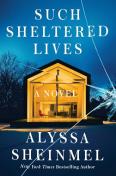

Such Sheltered Lives: A Novel
by Alyssa Sheinmel
Hardcover : 288 pages
0 club reading this now
1 member has read this book
Rush’s Recovery promises its wealthy guests the utmost ...
Introduction
For fans of Nine Perfect Strangers and The Midnight Feast, a moody, atmospheric psychological suspense set in the secretive world of celebrity rehab centers, from New York Times bestselling author Alyssa Sheinmel.
Rush’s Recovery promises its wealthy guests the utmost discretion. But when a body is discovered, how long can the center’s secrets stay buried?
Tucked among the pristine beaches and lavish manors of the Hamptons sits Rush’s Recovery, a rehabilitation center where ultra-high net worth clients can seek treatment away from prying eyes and paparazzi. The center’s latest guests have just arrived: Lord Edward of Essex, a British aristocrat fighting his black-sheep status and a painful addiction; Amelia Blue Harris, the daughter of a 90s rock legend struggling with an eating disorder; and Florence Bloom, a pop star trying to lay low after her latest tabloid scandal. Each has been promised the highest standard of care, from daily therapy and a live-in chef to acupuncture sessions and a personal care manager, available 24/7. Just so long as they stay in their private cottages and never interact with the center’s other guests.
But these three self-destructive B-listers have no intention of playing by the rules. No amount of cold plunges and talk-therapy can prevent Florence’s illicit flirtation with a staff member, or keep Amelia Blue and Lord Edward from sneaking out to wander the snow-covered grounds at night. Celebrities check in to Rush’s Recovery to protect their privacy, but the darkest secrets may lie in the center’s own history—and not every guest will be checking out alive.
Editorial Review
No Editorial Review Currently AvailableExcerpt
Chapter 1: Amelia Blue 1 Amelia Blue Let me tell you what I know. I know how many calories are in a serving of fat-free Greek yogurt (eighty) and how many are in the three frozen strawberries I chop and mix into it (six each; eighteen total). I know precisely how many miles there are between our house in Laurel Canyon and LAX (17.9), and approximately how many minutes it will take to get there (never under an hour, unless I’m taking a very early morning flight). I know the date of my father’s death (December 8, 2001) and the time (4:17 in the morning), but I didn’t know it before the general public. (I was only five at the time, and my mother waited days to tell me. By then I’d seen Dad’s face plastered on the cover of magazines beneath headlines I couldn’t read but could tell were nothing good.) I know my grandmother’s old landline by heart (914-555-0654) even though she hasn’t lived in her East Coast apartment since January 30, 2002, when it became apparent that my mother was ill-equipped to raise me by herself. I know that my grandmother has never arrived at an airport less than two hours before her flight was scheduled to take off and that my mother has never arrived more than twenty minutes before her scheduled departure, not even if we lied to her about the time, hoping to get her there earlier. I know my mother’s Social Security number and that my father’s suicide note was dated two days before he went through with taking the drugs that ended his life. I know that particular fact not because anyone told me but because my mother posted the letter to her Myspace account two years after my father died for the whole world to see (Myspace being all the rage at the time), and eventually the whole world included me. There are, by my count, approximately seventy-seven conspiracy theories suggesting that my mother murdered my father, and that the date on the note somehow proves it. Personally I think my dad was so out of it by then that he didn’t know what day of the week it was, let alone the actual date. I suppose it’s strange that he dated his suicide note at all, but apparently Dad dated everything. Here’s another number I know: In 2021, some billionaire bought a page of Dad’s lyrics dated March 3, 1993, for five hundred thousand dollars from a fan who’d swiped Dad’s notepad from his dressing room after a concert. Right now, I know that my flight (American 29) is scheduled for takeoff at 6:11 a.m. from LAX for a 3:02 p.m. arrival at JFK. Which means it is precisely 4:11 a.m. when my grandmother (Naomi) drops me off at the airport. Traffic is light, and the drive takes fifty-nine minutes; it’s hard to say whether the other drivers on the road are early risers or still awake from the night before. “You sure you don’t want me to walk you to the gate?” Naomi asks. “I could park the car.” “You’re not allowed past security.” “I could get permission.” They let her walk me to the gate when I was small, flying to meet my mother while she crisscrossed the country, ostensibly to work, though it looked to me like a prolonged party, stretching from sea to shining sea. Back then, I was an unaccompanied minor, often the first person to board. Naomi would hug me tight, and I’d walk up the Jetway alone. When it was time to send me back home, my mother and I would arrive at the gate panting, winded, having begged someone or other to hold the plane for me, always certain they’d make an exception for her, for Georgia Blue, whose face they’d seen on magazine covers and posters and late-night talk shows. There was never time for hugs or kisses goodbye. Sometimes I wondered whether she made us late on purpose so she had an excuse not to hug me, like I was a child made of spikes, like she already knew I would become all bones and angles, not at all pleasant for a parent to hold. All of this to say, another thing I know is how to navigate an airport. “I’ll be fine,” I tell my grandmother now. I merely have to get from the curb to the gate in a timely manner. Then, sit in my assigned seat, where someone will tell me when it’s time to fasten my seat belt, time to drink, when it’s safe to stand, when it’s safe to leave. If there’s a delay, it’s not my fault, and if we’re early, it isn’t because I did something right. “And it has to be this place?” Naomi asks for the hundredth time. “There are dozens of other places that specialize—” “I’ve been to those places,” I interrupt, also for the hundredth time. “They haven’t helped.” Naomi sniffs, and I hear the words she isn’t saying, ghosts of arguments we’ve already had. “You agreed this was the right choice.” “I agreed that you needed to go back into treatment. You insisted it be there.” In fact, I refused to consider anyplace else. I felt guilty for practically blackmailing my grandmother, but it was the only way I could get her to go to the bank and secure the funds from my trust to finance my stay. “The best care money could buy. Even Georgia said so, remember?” I say. “They must have something all those other places don’t.” Naomi nods, not because she agrees, but because this part of the conversation is over. We’re at the airport; the tickets have been purchased, my spot secured: I’m going. She gets out of the car to hug me goodbye. “So skinny,” she says, her fingers digging into my ribs like she’s checking to make sure they’re each still there. “You packed warm clothes?” It’s such a normal question that for a split second I believe that I’m magically leaving for college or grad school all over again. “Of course,” I promise. I spread out my arms, indicating the oversize cable-knit cardigan I’m wearing even though the average high temperature in LA in January is sixty-six degrees. (Another thing I know.) “Are you sure you don’t want me to arrange a car to take you from the airport to Shelter Island?” Shelter Island. The name should be comforting, but instead it makes me picture stormy waters and pursuing pirates. Things from which you seek shelter, not shelter itself. “I don’t mind the train,” I assure her. I lift my bag over my shoulder and walk into the terminal. Inside, I’m hit by an onslaught of smells: cheap food, cinnamon chewing gum, bare feet, anxious sweat. I hear children crying, businesspeople taking meetings on their cellphones, metal detectors beeping in protest, change being emptied from pockets. When I was little, I loved airports. Everyone at the airport, it seemed to me, was on their own private mission: checking their bags, getting through security, racing to make it to their gate on time. The people who work at airports wear uniforms with nametags fastened to their chest or on lanyards around their neck; they manage to look at once harried and bored. I used to play at distinguishing the business travelers from the vacationers, the people who are leaving home from the ones returning. Today, when I reach the gate, I curl into a rubbery chair, circling my left wrist with the fingers of my right hand, pleased that I can do it pinkie finger to thumb, fitting like a loose bracelet. My phone buzzes with a text. Abby, I’m getting worried. I clear the screen before I can read the rest of the message, before my heart can feel warm at the nickname Jonah gave me. (I really should block his number.) I stand and pace. Moving burns calories, and there will be no choice but to keep (mostly) still on the plane. The next several hours of my life are literally mapped out, west to east: just under six hours to JFK, two hours on the train to Bridgehampton, followed by forty minutes in a car including ten on a ferry. It’ll be long past dusk by the time I get where I’m going. This time of year, the days are short. Shelter Island is so far east that the sun there sets nearly fifteen minutes earlier than it does in Manhattan. When they board us, I’m the last person to take her seat. My mother used to say, Celebrities board last. We’d hold up the line with people stopping to gawk at us. Not that I’m a celebrity. No one on the plane seems to recognize me, and why should they? It’s mostly my name that’s famous, not my face. And that’s only to an ever-shrinking group of fans. But if you’re a certain age and like a certain kind of music, you’ve heard the stories. You know (because the press said so) that I was addicted to heroin when I was born in 1996. Maybe you read the tabloid articles “reporting” that I was kept in the hospital following my birth because I was going through withdrawal. They said that CPS came and refused to release me to my parents’ care. They said my dad (Scott Harris, bass-playing Gen X god) paid off the agents who were supposed to keep me safe. They said it was disgusting that government employees would prioritize money and fame over a helpless child’s welfare, and my birth story turned into a warning tale about government corruption. Meanwhile, I was (apparently) home with my parents, and my grandmother had taken charge (Naomi moved herself in until I was six months old), so I was fed and diapered and sleep-trained and whatever else you do with infants. If I’d gone through withdrawal, I certainly didn’t know it. When I was thirteen years old, I asked Naomi what really happened and she said the press exaggerated to sell papers, which isn’t exactly a denial. I didn’t bother asking my mother. (You know what they say: How can you tell if an addict is lying? Their lips are moving.) The flight attendants walk the aisles to offer drinks, pretzels, stale cookies. The person sitting beside me pulls a paper bag from beneath the seat in front of him: McDonald’s. I haven’t eaten McDonald’s for years, but the smell is so familiar it’s like I’m five years old again. My seatmate rips his ketchup packets open with his teeth. I feel like sugar is entering my bloodstream through osmosis. I root through my bag until I find a piece of gum. No minty freshness for me: I prefer watermelon, orange, strawberry, flavors made from artificial sweeteners packaged in colors that don’t exist in nature. It’s almost enough to overpower the scent of soggy french fries and overcooked meat. I chew so hard my jaw aches, trying to distract myself from the twist of hunger in my belly. Six hours later, I watch pale winter sun glint off New York City’s skyscrapers as the plane turns east toward JFK. I close my eyes, trying to imagine Manhattan in the early nineties, Georgia traipsing down one or another city block with her bad dye job, dark roots pulled into a greasy bun. Something else I know: The expression jonesing comes from Great Jones Street, because it’s where dealers used to hang out. Now there are million-dollar condos on the same corners where my mother scored her first highs. By the time I was old enough to notice, Georgia’s celebrity was fading. Still, she always found a way to keep the world paying attention. So many times, I almost told her that I was paying attention, but I knew there was no point. One little girl’s focus is nothing compared with the whole damn world. For as long as I can remember, I knew that my mother was a drunk and a drug addict, too interested in her substances to spend time with her daughter, so interested that she found a way to score, time and again, even at rehab. That’s what the tabloids said, the industry insiders, her manager, even her mother. It’s what I would’ve said, too, had anyone asked me. I squeeze my right wrist with the thumb and forefinger of my opposite hand until it feels like my bones are protesting against my grip, as if to say, Don’t you know you can’t make your bones shrink like you can the rest of you? No, I want to tell my bones. I don’t know anything anymore. view abbreviated excerpt only...
Discussion Questions
From the author:1. Despite the main characters’ privileged backgrounds, Amelia, Florence, and Edward have troubles that cross socioeconomic boundaries—addiction, eating disorders, grief. Are you able to relate to Amelia, Florence, and Edward? Why or why not?
2. Do you think any of the novel’s main characters are “likeable”? Does a book need a likeable main character to be compelling, and does a character needs to be likeable to be sympathetic?
3. Such Sheltered Lives has three first-person narrators. Was there one character whose chapters you looked forward to more than the others? Do you like reading books with multiple narrators? Why or why not?
4. Throughout the novel, there are interludes from the perspective of Shelter Island locals, revealing that simmering tensions between the locals and the summer people can be stark. How did the interludes impact the way you read the main storyline?
5. Though she tries to appear confident and unflappable, Florence is wracked with insecurity—about her abilities as a writer; her failings as a mother, daughter, and wife; her relevance as she ages and the music world goes on without her. Which do you think is the real Florence—the brash woman who faces the world bravely, or the insecure woman who doubts her every choice? Is it possible that she’s both?
6. Years after her mother Georgia’s death, Amelia discovers things she never knew about her. In some ways, Amelia feels closer to Georgia now, all this time later. At the end of the novel, do you think Amelia has found peace regarding her relationship with her mother? Is it possible to build a connection to the people we’ve lost that’s stronger than the one we had when they were still with us?
7. Do you think Edward will return to England? Will he continue to have a relationship with his family, or will he leave them behind as his mother did before him? Knowing what you know about Edward’s family, how do you feel about the way his mother left him behind?
8. While at the center, Florence writes a song called “Imposter Syndrome.” Imposter Syndrome is defined as a psychological pattern where individuals doubt their skills and accomplishments despite evidence to the contrary, fearful that they will be exposed as frauds. Florence wrestles with imposter syndrome like so many of us, particularly women. Does this struggle explain or excuse some of her behavior? Have you ever experienced imposter syndrome? Does it make you feel more connected to a character like Florence, despite her privilege and behavior?
9. Florence’s final song is titled “The Good Mother”; it’s about the mother she was and the mother she still hopes she can become. Many of the mistakes she made were because she was trying to protect her daughter. Do you think Florence is, at least on some level, a good mother, even with her many flaws?
10. Andrew and Evelyn aren’t held legally responsible for the damage they did, though—as Amelia reflects—leaving them alone on the island feels like its own small punishment. Do you feel that they got what they deserved? Why or why not?
11. Do you think that any of Rush’s Recovery’s practitioners had their patients’ best interests at heart? Why or why not? At the end of the novel, Amelia and Edward both want to recover—do the care managers they worked with deserve any credit for that, or do Amelia and Edward want to get better despite the care they received?
12. Author Alyssa Sheinmel has written that the idea for Such Sheltered Lives began with an article about an exclusive rehabilitation center in Switzerland. She wondered what might lead someone to a place most of us don’t even know exists. What do you think about real-life places like Rush’s Recovery, and the people they serve?
Book Club Recommendations
Recommended to book clubs by 0 of 0 members.
Book Club HQ to over 90,000+ book clubs and ready to welcome yours.
Get free weekly updates on top club picks, book giveaways, author events and more