



BKMT READING GUIDES
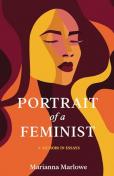

Portrait of a Feminist: A Memoir in Essays
by Marianna Marlowe
Paperback : 288 pages
1 club reading this now
0 members have read this book
Infused with a passion for justice, this sublime, expansive memoir by a Peruvian American feminist will appeal to fans of Crying in H Mart and How to Raise a Feminist Son.
Through braided memories that ...
Introduction
“A confident, impressionist portrait of a feminist life.”--Kirkus Reviews
Infused with a passion for justice, this sublime, expansive memoir by a Peruvian American feminist will appeal to fans of Crying in H Mart and How to Raise a Feminist Son.
Through braided memories that flash against the present day, Portrait of a Feminist depicts the evolution of Marianna Marlowe’s identity as a biracial and multicultural woman—from her childhood in California, Peru, and Ecuador to her adulthood as an academic, a wife, and a mother.
How does the inner life of a feminist develop? How does a writer observe the world around her and kindle, from her earliest memories, a flame attuned to the unjust?
With writing that is simultaneously wise and shimmering, nuanced and direct, Marlowe confronts her own experiences with the hallmarks of patriarchy. Interweaving stories of life as the child of a Catholic Peruvian mother and an atheist American father in a family that lived many years abroad, she examines realities familiar to so many of us—unequal marriages, class structures, misogynist literature, and patriarchal religion. Portrait of a Feminist explores the essential questions of feminism in our time: What does it look like to live in defense of feminism? How should feminism be evolving today?
Editorial Review
No Editorial Review Currently AvailableExcerpt
Prologue: Feminist or Not? (California, 2013) I scan the formal dining room. Twelve young faces look back at me, expectant. The group is all girls, all of them long-haired and most of them pony-tailed, all but one white. This is a National Junior League meeting a friend of mine asked me to lead. Her daughter, blonde as well as long-haired and pony-tailed, sits among the others at the polished mahogany table. I have two hours to teach them about media literacy. What I’m desperate to teach these girls is how to read the “texts” surrounding them every day and everywhere: the advertisements, romance novels, billboards, songs, and music videos, the movies, television shows, fashion magazines, Super Bowl commercials, and makeup tutorials, the Barbies and dolls and mannequins that each and every one contains coded and uncoded messages about them—how they, young women, should look and behave, what they should want, what they should put up with, why they should be ashamed. I want them to see the ever-present influences of our patriarchal culture, the ones working their spells, saturating every part of our social ecosystem like powerful dye tainting a bowl of water—or, even more fittingly I think, like toxic bacteria colonizing a host body. I start by asking the question I used to ask my college classes at the beginning of each semester: “Who here is a feminist?” Almost immediately, a hand shoots up. It belongs to the stocky, athletic girl at the table. After a moment’s hesitation, during which they see this first girl’s hand in the air, two more girls, still tentative, raise their hands. My eyes scan the group of young women once again, hoping for another hand. No one else moves. I sigh—but only on the inside, of course. I’d hoped that in the ten years that have passed since I taught undergraduate courses, the culture would have changed more than it has, much more than three raised hands, two of which are ambivalent. Regardless, I do what I always do, I do the only thing I can think to do: I launch into the lesson. Part I SEEDS PLANTED In the Beginning (California, 1971) I sit on the toilet seat in our Jack-and-Jill bathroom, writing as furiously as a five-year-old can write. I’m in a hurry—worried and sad. I clutch at the crayon, pressing hard on the unlined paper. It is a letter I’m writing. What heading do I give it? Dear Aunt Clara? Dear Tía Clara? Dear Clara? Probably the latter. Because I live in the US, speak English, and never learned to call my Peruvian aunt “tía”—despite my mother speaking only Spanish to me—it must be Dear Clara. I’m halfway through the scrawled letter when my mother comes into the bathroom to find me. My mother always knew, even if vaguely, where I was. She was attuned to me, just as I was attuned to her. Not quite at the same level, to be sure, for I was a vibrating antenna, always pointed in her direction, registering her whereabouts, her activities, her moods. And she, by that time, already had another child who needed her love and attention. When she sees me on the toilet seat, writing instrument in hand, she gives a little exclamation of surprise and pulls the paper gently from my fingers. It only takes her a few seconds to get the gist of the contents, to understand that her young daughter has been writing to her sister who lives thousands of miles, a different hemisphere, and a three-hour time zone away to ask for money. I’m asking for money, she reads, because she, my mother, needs it. She needs it because my father won’t give her any. Did I write Papá or Father or Daddy? Of course Daddy. At five, and speaking mostly English, why would I think to write anything else? That’s what I called him then. Although now, whenever I think of him in the past, I think of him as “my father,” and have called him “Dad” for years. When I look back at him as the father of my childhood, he is a tall, quiet presence in my life, serious and authoritarian, a man with whom rules are to be followed, chores to be done, orders to be obeyed. “Daddy” won’t give “Mommy” the money she needs. I can hear them out in the kitchen, beyond the closed door of the bathroom. They are fighting. They always argue in Spanish, which is the language of their marriage. I’ll learn later that once my American father became engaged to my mother, he traveled to Peru to take a crash course in her native tongue, and always spoke it with her thereafter. Although I choose not to speak Spanish most of the time, I can, and am fluent in understanding it. So I know my mother wants cash from my father, who controls the money and makes all the final decisions about finances. In this instance, he doesn’t feel she has a good case. She doesn’t need the money, only wants it. And they are on a budget. “The house” cannot afford it. It is clear to my mother, as she tries to convince my father to give her some, that she won’t get it. I hear from the tone of her voice that she really needs it and Daddy won’t give it to her because . . . I don’t know why, but I think in my head that he is mean. He’s so mean. He’s mean to my mother and my mother is sad and she needs the money. But my aunt has money. I know because I’m familiar with her house in the suburbs of Lima. I’ve watched from the backseat as the guard runs to open the gate when he recognizes my aunt at the wheel, and seen the cars and the servants and the fountain and the silver. I’ve looked on as she’s sorted through her jewelry in the wide shallow drawers designed for easy access; I’ve watched her spray herself with the perfumes lined up on the bathroom shelf. She is rich. I’m sure she has extra money to give to my mother. Could she send some right away? ¿Por favor? My mother laughs a little laugh of shock and gratification as her eyes finish scanning the creased paper. “Ay, mi vida,” she says. “¿Qué estás pensando? Tenemos suficiente plata. No te preocupes.” And she keeps the paper, my messy, half-written letter, and crumples it up, and throws it away. My husband hears me talk about this long-ago event when I sat in the single bathroom of my family’s cottage, on the toilet seat, trying to craft a letter to an aunt I saw as a rescuing angel. “That’s impressive,” he says. “You have such a good memory. How can you remember so far back?” I think for a moment. “Because I was traumatized,” I finally say. I was traumatized by watching my mother’s pain, by feeling responsible for alleviating it, for taking it away, for finding a solution. And the enemy, the source of the problem, always seemed to be my father. I saw it in the bickering and arguing and fighting, I felt it in their silences and dagger-eyes and stony faces. I knew it for sure when my mother complained to me about him, her rigid and implacable Anglo husband, using me as a sounding board and best friend and confessor. If Spanish was the language of my parents’ marriage, then in those days, when I was a young child, during the time of my earliest memories, the kitchen was the room of my parents’ relationship. The wooden table where we sat together for our meals as a family could have worked as a metaphor except that my parents’ marriage needed more space to manifest itself, to show how it functioned—its push and pull, friction and conflict. And in that kitchen I was the sponge that wiped up the mess and absorbed the tension and got squeezed into the sink to slide down the drain, and I was also a container that received the matter, the material, of my parents’ anger and held it, tight and safe, keeping it for my mother. My parents’ dissatisfaction with each other dripped and fell and spread over the surfaces, the wooden table, the laminated counters, the vinyl floor. Someone had to clean it up, and the task fell to me—or I accepted it, maybe even embraced it, grasping it to me and hugging it tight. I was the oldest child, and so close to my mother that sometimes I didn’t know where I ended and she began. When her voice broke, my heart constricted. When she was sad, I cried. When she was in trouble, I wrote a letter to her sister, her older sister who was rich and powerful and loved my mother without bossing her around or denying her anything. I was the sponge, I was the sink, I was the drain, I was the container—the pitcher or the bucket or the tub—the final resting place of my mother’s frustration and powerlessness in the face of my father’s stubborn need to control. For years I babysat for a young family with an only daughter, starting when she was a few months old and continuing into her tweens. Her mother, who for a while dabbled in Jungian psychology, commented often on my family’s dynamics. “You and your sister are way too close to your mother,” she’d say. “You’re too old to be so enmeshed. You need to have more boundaries.” I would look at her as she spoke, oh so confidently, about my family that, yes, she knew fairly well, but which she judged from an alien perspective, from the viewpoint of a diametrically opposed culture. Ha, I thought to myself, you don’t know what you’re talking about. Even though you were one of eight children, you spent your adolescence alone in boarding school on the East Coast. No one cared about you the way my mother, who is warm and loving and Peruvian, cares about us. And I was smug and satisfied in our lack of boundaries, in my closeness to my mother, in her vast, unconditional love for me and my sister and my brother. I know now I am more like my father, in personality and even in looks, but my entire childhood was my mother’s. I belonged to her—body, mind, and soul. I was making myself into her image. Watching and waiting and wanting, observing and emulating. As the birthdays passed, numbers six-seven-eight-nine, her tastes became mine, her values my own, her desires always my commands. My father was the Other. He was the opposite of my mother, her antithesis; all of their differences were polarized for me as a child. If, when I was young, I’d had to choose between my mother and my father in any scenario, from sleeping in the same bed or driving around with them on errands to divorce or a sinking ship, I would have chosen my mother. Every time. It took years into adulthood for me to see my father as an individual free from the mantle of my mother’s desires and disappointments. I would say, if it were possible, that I was born a feminist. I feel it in my bones, in my core, in my very Self. Because mine is a feminism that cannot bear injustice, it was my defining identity growing up, in school, out clubbing, as a graduate student, dating and courting and marrying, as a wife and mother, an intellectual and scholar. Watching my parents interact, sensing the tension between the easygoing extrovert who felt comfortable in domestic chaos and rejuvenated by parties and music and dancing versus the introverted loner who needed everything neat and tidy and quiet regardless of his wife’s desires or children’s personalities, served to feed that feminism like fresh soil around a plant and sharpen it like a blade on a stone. Growing up, I felt as if I were watching a game, or a boxing match, and my mother was clearly the underdog. She didn’t hold the purse strings and therefore she didn’t hold the power. My father’s word was, without exception, the last; it was his way or the highway every time. I’d watch and root for my mother, demonizing my father as her opponent, especially when, as I grew into adolescence, I jumped into the ring to defend her—always to no avail. The thing is, I was my mother’s second-in-command, her assistant coach, her Girl Friday. Also her therapist, priest, and best friend. If early experiences shape a self, guide a growing, developing identity, then my mother, my parents, and, most of all, their relationship to each other, shaped me. Their marriage took my feminism, that innate sense of justice untempered by rationalizations, excuses, lies, or obfuscations, and shaped it through the template of their relationship, ultimately as witness for and defender of my mother. Our skin sloughs off day by day and month by month until seven, perhaps ten years later we are totally different people: hair, skin, nails, all new—nothing left over from the past. Recently there has been scientific talk of our changing in more essential ways throughout our lives, not just surface characteristics but also outlook, values, sense of self—our very subject-ness. Like a snake, but in much slower time, we shed not only our skin but also our old selves, our former personas, including our ignorance, our biases, our humiliations, and our embarrassments. I resist this, however compelling it is to believe in continuous opportunities for renewal and redemption. I need to feel I have a core, an essence, indelible and unassailable. I hold on to this belief even if by doing so I condemn myself to the initial molding of my childhood, when my parents and their personalities, their interactions, and their marriage branded me in ways that will forever mark me—how I think, the nature of my feminism. My mother, if asked, would have rejected outright the label of “Feminist.” She would have thought feminists then, in the seventies, weird white women—American, loud, and unfeminine. She still calls opinionated women “sargentos” and protesting feminists who behaved “como hombres” fit this definition, shouting in the streets with their signs and their slogans. My mother had an aunt who advocated bra wearing rather than bra burning. She advised wearing a bra twenty-four hours a day, seven days a week, even to bed, in order to keep the breasts high and perky in defiance of nursing and gravity. My mother followed this advice for many years, as did I, having also in my late teens received the lecture on the power of the brassiere. Yet my mother did not remain passive in the face of my father’s dominance. She fought for control, trying to seize agency in the areas that mattered to her most. She wanted a say in the finances, for example, in the ways my father’s salary was budgeted for the household. With a keen eye for real estate, she wanted to invest in certain properties and loved the idea of the fixer-upper long before it became a trend. She wanted to buy herself and her daughters new, fashionable clothes more often. She wanted to spend money on airline tickets, to visit her sister. But my father allotted an allowance for himself and his wife, refusing her access to the bank account. I, like many others, was fired in the clay oven of my nuclear family. It was because of them that I entered the world, finally, as an adult, the way I did. These true stories reflect that early molding, and also bear witness to the myriad other influences in the continuing evolution of the feminist I am today. I can never be sure how much of myself was modeled and framed, measured and cut by growing up in my particular family, observing my parents, loving my mother, and how much by the combination of other factors in life—a specific set of genes and a collection of experiences unique to me. In trying to envision the ways my feminism developed, starting from my very first memories, there first comes to mind, sadly, the image of a gauntlet run: veering from, sometimes colliding with, unhappy moments and flagrant unfairness. But there are also the more pleasing, more satisfying images of the mosaic and the stones, the collage and the pictures, and, ultimately, the narrative and the words. Selecting the words, creating a narrative. This time with penned notes or typed documents rather than crayon on scratch paper, and at a desk or on a couch or in my bed rather than on the closed seat of a porcelain toilet. Writing for myself this time rather than on behalf of my mother. Thinking about my past, pondering why I remember what I do, and examining those memories is a journey. The words, the paragraphs, the essays make up my path. Any answers, regardless of how incomplete or continuing or exploratory, to how my feminism developed, what is its complicated and shifting nature—the holy grail. view abbreviated excerpt only...
Discussion Questions
From the author:1. Discuss the book’s title, Portrait of a Feminist. What do you think feminism means to the author? How do you think she came to this definition?
2. Discuss the author’s voice and role as narrator. In what ways does she explore identity, family history, relationships, and gender roles through the prism of her life experiences?
3. The book is organized in essay-chapters. Why do you think the author structured her memoir in this way? How did this structure affect your experience of reading the book?
4. Discuss the main events or turning points that shaped the author’s understanding of feminism. How do they reflect your own ideas about feminism?
5. Some of the chapters depict the intersections of identity, specifically a gendered identity, and various cultural norms. Did any of these depictions challenge, enhance, or reinforce your experience of feminism?
6. In some chapters the author questions her own values and assumptions around gender identity and women’s rights. One such chapter is “It’s Sometimes Gray,” and another is “Leda and the Swan.” Discuss the effect of that kind of interrogation on the reading experience in general and your own assumptions about gender.
7. There are many “characters” in this book, from the narrator herself to family, friends, colleagues, and strangers. Do you have a favorite? A least favorite?
8. Do you have a favorite chapter? Or one that stayed with you?
9. What were some of the “takeaways” from the book? Did any resonate with you?
Book Club Recommendations
Recommended to book clubs by 0 of 0 members.
Book Club HQ to over 90,000+ book clubs and ready to welcome yours.
Get free weekly updates on top club picks, book giveaways, author events and more