




BKMT READING GUIDES
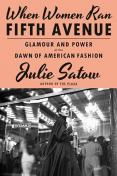

When Women Ran Fifth Avenue: Glamour and Power at the Dawn of American Fashion
by Julie Satow
Hardcover : 320 pages
10 clubs reading this now
0 members have read this book
A BEST BOOK OF THE YEAR: Vogue, Smithsonian, New York Post, and Financial Times
"Ms. Satow’s ...
Introduction
NEW YORK TIMES BESTSELLER • A glittering portrait of the golden age of American department stores and of three visionary women who led them, from the award-winning author of The Plaza.
A BEST BOOK OF THE YEAR: Vogue, Smithsonian, New York Post, and Financial Times
"Ms. Satow’s carefully researched book is compulsively readable: I found myself dashing through it like a novel. She portrays the women with verve; we get a glimpse into their lives, as well as a sense of what it was like at each of these retail meccas." —The Wall Street Journal
"Compelling and colorful" —The Washington Post
The twentieth century American department store: a palace of consumption where every wish could be met under one roof – afternoon tea, a stroll through the latest fashions, a wedding (or funeral) planned. It was a place where women, shopper and shopgirl alike, could stake out a newfound independence. Whether in New York or Chicago or on Main Street, USA, men owned the buildings, but inside, women ruled.
In this hothouse atmosphere, three women rose to the top. In the 1930s, Hortense Odlum of Bonwit Teller came to her husband's department store as a housewife tasked with attracting more shoppers like herself, and wound up running the company. Dorothy Shaver of Lord & Taylor championed American designers during World War II--before which US fashions were almost exclusively Parisian copies--becoming the first businesswoman to earn a $1 million salary. And in the 1960s Geraldine Stutz of Henri Bendel re-invented the look of the modern department store. With a preternatural sense for trends, she inspired a devoted following of ultra-chic shoppers as well as decades of copycats.
In When Women Ran Fifth Avenue, journalist Julie Satow draws back the curtain on three visionaries who took great risks, forging new paths for the women who followed in their footsteps. This stylish account, rich with personal drama and trade secrets, captures the department store in all its glitz, decadence, and fun, and showcases the women who made that beautifully curated world go round.
Editorial Review
No Editorial Review Currently AvailableDiscussion Questions
Questions from SuperSummary--added by Pauline:1. The book follows three pioneering women executives who shaped American department stores—Hortense Odlum, Dorothy Shaver, and Geraldine Stutz—each with distinctly different approaches to leadership. Which of these women’s stories resonated with you most strongly, and why?
2. How does Satow’s approach to retail history in When Women Ran Fifth Avenue compare to her exploration of another iconic New York institution in The Plaza: The Secret Life of America’s Most Famous Hotel? If you haven’t read her previous work, how does this retail history compare to other business histories such as Barbarians at the Gate?
3. Department stores are portrayed in the book as “uniquely female universes where women commanded power in ways that were often unattainable elsewhere” (13). How effectively does Satow convey the significance of these spaces as sites of female empowerment during the mid-20th century?
Personal Reflection And Connection
Encourage readers to connect the book’s themes and characters with their personal experiences.
1. Hortense Odlum famously blamed her career for the failure of her marriage, while Dorothy Shaver remained single to pursue her ambitions. How do you navigate the balance between professional goals and personal relationships in your own life?
2. The book highlights how department stores evolved from selling merchandise to creating immersive shopping “experiences.” How have your own shopping preferences and experiences with retail spaces changed over time?
3. Each of the women whom Satow profiles faced significant barriers to leadership due to the gender expectations of their era. What expectations or assumptions have you encountered in your professional life based on your gender or other aspects of your identity?
4. Geraldine Stutz’s success at Henri Bendel came partly from her ability to spot emerging designers. How do you determine what trends to embrace in your own style choices, and what influences your decisions?
5. The female executives in the book often leveraged their understanding of women customers’ needs to improve their stores, like Dorothy Shaver’s introduction of petite sizing and childcare services. Can you think of an instance when you felt that a business truly understood and addressed your specific needs as a consumer? How did it make you feel?
6. The department stores in Satow’s book were cultural institutions that shaped public taste beyond simply selling products. What spaces or institutions have influenced your own tastes?
Societal And Cultural Context
Examine the book’s relevance to societal issues, historical events, or cultural themes.
1. Satow contrasts the experiences of white female executives with those of Black entrepreneurs like Maggie Lena Walker, who faced both sexism and racism in establishing the St. Luke Emporium. How does the book’s discussion of race and retail contribute to our understanding of intersectional barriers in American business history?
2. The book traces how department stores reflected changing social attitudes toward working women throughout the 20th century, from the flapper era through post-war domesticity. What parallels do you see between these historical shifts and contemporary debates about women in the workplace?
3. Many of the department stores featured in the book have closed or dramatically downsized in recent decades, including Henri Bendel’s closure in 2019 and Lord & Taylor’s shift to online-only in 2021. What factors have contributed to the decline of the grand department store era?
Literary Analysis
Dive into the book’s structure, characters, themes, and symbolism.
1. How does Satow’s choice to focus on three primary protagonists and intersperse their stories with shorter profiles of other influential women strengthen or weaken the book’s overall narrative?
2. The tension between femininity and power recurs throughout the book. How does Satow illustrate this conflict through her contrasting portrayals of Hortense Odlum, who “diminished her business accomplishments” to “retain her feminine bona fides” (95), and Dorothy Shaver, who embraced her role as “America’s No. 1 Career Woman” (22)?
3. Department store windows and displays feature prominently in the book, from Salvador Dalí’s controversial Bonwit Teller windows to the “street theater” created by Robert Currie for Henri Bendel. What do they symbolize within Satow’s narrative?
4. How does Satow use the post-war economic boom and subsequent rise of suburban shopping branches and discount stores as a turning point in her retail history? What does this transition reveal about changing American values?
5. Satow presents a cyclical pattern of progress and backlash regarding women’s roles in American society. How does she use her protagonists’ stories to illustrate these broader cultural shifts?
6. Satow suggests that department stores wer “third spaces” between home and work where women could have agency and professional identities. How does she evolve this concept throughout the narrative, and how does it contribute to her argument about the importance of these retail spaces?
Book Club Recommendations
Recommended to book clubs by 0 of 0 members.
Book Club HQ to over 90,000+ book clubs and ready to welcome yours.
Get free weekly updates on top club picks, book giveaways, author events and more