




BKMT READING GUIDES
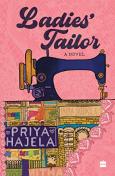

LADIES' TAILOR
by Priya Hajela
Paperback : 0 pages
0 club reading this now
0 members have read this book
Will Gurdev be successful in his new business of making garments for women? Will he find love ...
Introduction
This is a story of Gurdev and his cohort, a group of refugees who travel east from Pakistan after Partition. It is a tale of falling apart and coming together as the world burns around them.
Will Gurdev be successful in his new business of making garments for women? Will he find love after his wife and children leave his side? There may be uncertainty here, but there is also relentless hope.
Journey back in time and experience the refugee spirit as Ladies' Tailor captures you with all its romance, adventure and one man's iron will to not just survive, but to thrive with new beginnings.
Editorial Review
No Editorial Review Currently AvailableExcerpt
Chapter 14 Noor Ikram Hasan was an imposing woman, tall and garrulous. She knew everyone in her neighbourhood of Nizamuddin, Delhi. She lived not far from the dargah, the main mosque, and considered herself a social worker, the kind who had experienced a tragedy and survived, not the sort who went to the Tata Institute of Social Sciences and lived a life of service. She had gathered together a small group of women whose husbands had suffered a similar fate to her own. They met every week, at a chai shop or in someone’s home, drank tea, ate biscuits and discussed the latest films and fashions. Noor Hasan was a widow; her husband had fought in the Royal Indian Army for the British in Europe. He had been amongst the first to reach the river Po, bypassing Bologna, a part of the Royal Indian Army’s 8th Infantry Division that had engaged in weeks of battle with the retreating Germans. A stray bullet by a lone German sniper in a tree had killed him. The German must have fallen asleep while the rest of his people retreated. Corporal Ikram Hasan’s entire battalion turned and fired at that tree as if it was Hitler himself, turning it into a pile of bloody matchsticks punctuated by fragments of human flesh and bone. But it had been of no use to Corporal Hasan. He had bled out from a wound in his neck that had scraped his carotid artery, enough to create a small, scarlet fountain that rose out from below his face, went strong for what seemed like several minutes and then slowed down to a small dribble, taking with it the quivering in Hasan’s arms and legs, leaving him unmoving on the soft muddy ground, still thawing under the warm spring sun. Ikram’s comrade Imran had told Noor how he had watched his friend go from tall and strong, marching to victory, to dead in less than three minutes. She had wanted every detail, every stumble, every drop of blood spilled, and every cry of pain. She had loved her husband. They had been married almost four years when he first went to war and more than six when he died. He had come back home over those years of war, but all he had wanted then was to sleep in silence and to eat hot food. She had given him both and sat beside him, reading to him or quietly listening to the news on the radio and only going out to buy more fruit or more mutton. She had expected that he would return physically, and then over time return to himself, the man he had been – an energetic golfer, a lover of Sufi music, the man who could engage the guard at the gate in conversation about cricket for two hours, the man who drew people to himself. Both Noor and Ikram were only children from wealthy families that had chosen to serve the rulers as part of the bureaucracy. Both their fathers were part of the Indian Civil Services, both were part of the Imperial class of service, serving the central government in Delhi and both were allotted homes in Lutyens Delhi, not the palatial white structures set on acres of land – those were exclusively for the British – but smaller homes that were set in communities of senior Indian civil servants. These homes shared walls and hedges that separated small gardens but residents could call across to chat, or complain about a wayward dog, or sometimes a child. Noor and Ikram’s parents knew each other. They had arranged their marriage and things had gone on well until the war. It had not been surprising for Ikram to join the Royal Indian Army. He had joined the Prince of Wales Royal Indian Military College in Dehradun because he hadn’t been able to pass the competitive exam for the ICS and follow his father. He was one of a handful of Indian officers, along with his friend Imran Said, also a lieutenant in the 8th Infantry Division. They were part of a class of people who didn’t see anything wrong with serving the rulers. It wasn’t as if the British had just come in. They had been in India for decades before even their parents had been born. These were good jobs. They paid well and not anybody could get them. You had to be smart and aggressive and score in the competitive exams. You had to speak English and be comfortable with ruling over your own people, with rules made by outsiders. Noor didn’t exactly agree with her family’s decision to serve the British, but her protest was only a niggling thought inside her. She had heard mumbles in school but these too were unformed opinions from young people who had overheard things. After school, she moved away from home, to Aligarh Muslim University’s Women’s College, where she told no one about her family’s occupation. She had begun to be ashamed of her father, but not enough to stage a dialogue of any significance. When her parents proposed marriage to Ikram, also a servant to the rulers, she didn’t protest. However, when Ikram died, Noor moved out of her in-laws home, now a comfortable bungalow in Civil Lines, allotted to active ICS officers. Civil Lines was a prominent neighbourhood for people who mattered, and Muslims who lived there had been safe, at least at first. She moved to Nizamudin, a predominantly Muslim community that had arisen around the main Mosque. She rented a room at the back of a family home – they called it an annex. The family, an older couple, lived in the front house. Their married daughter and grandchildren visited occasionally from Lahore. It was more than a room, although that is what they called it and that is what her in-laws called it when she told them what she was doing – “you are going to live in a room in someone else’s house? What is the need for that when we have such a big empty house here? More empty because you and Ikram...” This exact dialogue was repeated seventeen times, followed by tiny sighs and tinier tears as her in-laws needled her for not getting pregnant while their son was still alive. Sometimes she felt that they had expected their son to die in their lifetime but his dying without an heir was the bigger tragedy. She couldn’t live with them and she couldn’t go back and live with her parents – that would be all this and matchmaking. Noor’s ‘room’ was a bedroom, a sitting room, a bathroom and a small kitchen. It had a separate entrance, its own veranda in the back and even a small patch of grass. It was sturdy construction, brick and mortar, with bars on the windows to keep thieves out, kota stone flooring, green and cool, high ceilings and a simple bathroom with an Indian-style toilet. The kitchen was a kerosene stove and a sink with a little counter space and two shelves for spices. This was December 1945. The big war was over. Indian troops who had fought for the British in the East and the West were returning home. Many were not. Subhash Chandra Bose and his efforts to ally with the Japanese to fight for India’s independence against the British were dead in a plane crash. On 6 December, after talks between Jinnah, Nehru and Mountbatten, Jinnah asked for the formation of Pakistan – a partition of India. Indians around the country were still fighting for independence in forms that were labelled acts of terror and their perpetrators terrorists. But people, as long as they followed the rules, were safe in their homes, barring petty crimes for which there were bars on windows and heavy padlocks on doors. Some had the view that the heavier the padlock, the more to steal. So, people put smaller locks to throw off thieves. Noor had nothing of value to anyone. She had left with her everyday clothes and her mojris. Her heavy suits and jewellery from both sides, she had left with her parents. She had brought her marital linens, embroidered bed sheets, table cloths and monogrammed towels, all of which she was supposed to have done herself and, in fact, much of which she had. She liked embroidery. It added to plain cloth beauty and depth that poetry added to simple words. She was usually working on something, cloth entrapped between two concentric wooden rings to keep it stretched, her pattern book on one side of her and her bag of coloured threads on the other. Noor had learned to embroider from her grandmother, but they had made frivolous things – tea cozies and tray cloths, small wall hangings, dinner napkins with a tiny flower in one corner; later more elaborate work but always for their own pleasure, never for any commercial purpose. Noor didn’t show off her embroidery. She worked on pieces, displayed them and let her eyes take in the craft and her execution. Sometimes, she ripped open an often-used towel and redid the work if she found an extra stitch or crooked beading. Noor settled into her new home, met her neighbours, and made some friends. These were not the sort of people she had met before. They were simple, religious, patriotic people who worked hard at small jobs. Every single person in her neighbourhood wanted the British out. Many came out into the streets and cheered when an Englishman was killed by a freedom fighter – that’s what they were called here, not terrorists. She lived on the pension the government gave her as a widow of a fallen soldier. She visited her parents and in-laws from time to time, and both gave her small bundles of money that she tucked away into her purse. Accepting it pleased them, but only after she pushed it away once or twice. She used the pension to live and the gift money to buy clothes. She liked everything about clothing, the fabric, the feel against her skin, how the piece went on her, how it made her feel. For anyone who said that it wasn’t the clothes, it was your carriage, she could prove ten different ways that they were wrong. And then there was the embroidery. Sitara and Reshma were two sisters she had found in her neighbourhood, saying their names – sequin and silk – brought visions of delicate stitches and graceful designs with little shiny bits that drew your eye this way and that. Most of the clothes she wore had been embroidered by the two sisters. Noor rebuilt her life, connected with old friends and made new friends. She survived post-Partition anti-Muslim riots because she lived in a predominantly Muslim area. Her parents and her in-laws had to seek refuge with neighbours, even in their posh, cosmopolitan areas. She kept to her home and the nearby areas when she heard stories of Muslims being massacred in their homes, set aflame while they slept. Of wealthy Muslims who had to go to Purana Qila camp because they were pushed out of their homes by roaming groups of Sikhs in jeeps, recently returned from abandoning their homes in Pakistan and eager for revenge. If she went out, sometimes she wore a different style of salwar kameez, the shirt more fitted, the salwar with circles of fabric, Patiala-style and covered her head the way Sikh women do. Sometimes, she wore her dupatta down and put a red bindi on her forehead and even sprinkled a little sindur in her parting. She was comfortable modifying her clothing like this because these were little things; these were all the differences between her and any Sikh or Hindu woman. Her friend Harleen had told her that it was easy for a Muslim woman to pass off as a Sikh but not so easy the other way around. Muslim women had a way about them, a way of draping their dupattas and holding their heads, a way of carrying themselves that Sikh women in their matter of fact simplicity could not copy. view abbreviated excerpt only...
Discussion Questions
From the author:1. What surprised you most about Ladies’ Tailor?
2. Is this a time in India’s history that you are familiar with? Is it a time you’d want to read more about?
3. What do you think motivated the author to write this book? What message is she trying to put across through this story?
4. What are your thoughts on the title of the book? And the cover?
Do they reflect the story? Would you give the book a different title?
5. If you were to meet the author what questions would you have for her?
Book Club Recommendations
Recommended to book clubs by 0 of 0 members.
Book Club HQ to over 90,000+ book clubs and ready to welcome yours.
Get free weekly updates on top club picks, book giveaways, author events and more