




BKMT READING GUIDES
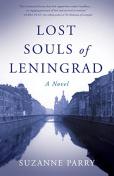

Lost Souls of Leningrad: A Novel
by Suzanne Parry
Paperback : 344 pages
1 club reading this now
0 members have read this book
2022 Foreword INDIES Gold Winner in War & Military (Adult Fiction)
From the tyranny of Stalin through the desperation of World War II, this is a story of struggle and survival, of devotion, duty, and ...
Introduction
2023 Independent Publisher Book Awards Silver Medalist in Military/Wartime Fiction
2022 Foreword INDIES Gold Winner in War & Military (Adult Fiction)
From the tyranny of Stalin through the desperation of World War II, this is a story of struggle and survival, of devotion, duty, and family, and of love lost and sometimes found again. June 1941. Hitler’s armies race toward vulnerable Leningrad. In a matter of weeks, the Nazis surround the city, cut off the food supply, and launch a vicious bombardment. Widowed violinist Sofya Karavayeva and her teenage granddaughter, Yelena, are cornered in the crumbling city. On Leningrad’s outskirts, Admiral Vasili Antonov defends his homeland and fights for a future with Sofya. Meanwhile, Yelena’s soldier fiancé transports food across the Ice Road—part of the desperate effort to save Leningrad. With their help, the two women inch toward survival, but the war still exacts a steep personal price, even as Sofya’s reckoning with a family secret threatens to finish what Hitler started. Equal parts war epic, family saga, and love story, Lost Souls of Leningrad brings to vivid life this little-known chapter of World War II in a tale of two remarkable women—grandmother and granddaughter—separated by years and experience but of one heart in their devotion to each other and the men they love. Neither the oppression of Stalin nor the brutality of Hitler can destroy their courage, compassion, or will in this testament to resilience.
Editorial Review
No Editorial Review Currently AvailableExcerpt
Along the broad, late-night avenues of central Leningrad, the last of the concert-goers hurried home ahead of curfew. They hastened down side streets and darted into courtyards, while Sofya leaned against the wall of the artists’ entrance inside Philharmonia Hall. She pulled on her boots as her comrades finished sharing a cigarette and some gossip with the guard. By the time the three musicians made their way up Nevsky Prospekt to Sadovaya Street, the roads and sidewalks were deserted. Indistinct halos around the streetlights cast a reluctant glow. Collars up against the snow, her much younger colleagues turned off together, leaving Sofya to walk alone through the once elegant city. She touched a pocket, checking for her propusk, the pass which allowed her to be out after curfew. Every shadow and every breath of wind reminded her that the city was a playground for the secret police. When he was alive, Andrei often met her after evening performances. Carrying her violin case in one hand and holding her arm with the other, he made her feel safe, even as the city turned on itself. When the arrests started, no one thought it would happen to them. They’d done nothing wrong. But then friends and acquaintances disappeared, people who also hadn’t done anything wrong. Stalin and his subordinates found fault with all manner of innocent citizens and benign circumstances. Soon old grudges and petty darknesses oozed out of apartments and workplaces. Neighbors spoke against neighbors. Once defined by music, literature, and majestic architecture, a vibrant city where people thought, and thought out loud, Leningrad had become a drab version of its former self—little more than a tarnished tomb holding a body without a breath. Not unlike its namesake on eternal display in Moscow’s Red Square. Two shadowy figures loomed ahead on the Anichkov Bridge. As she drew closer the burly policemen blocked the sidewalk, bears stalking a defenseless elk calf. “What are you doing out at such an hour? It’s past curfew. Where are your papers?” A gust of wind whistled as they snarled and snapped. Sofya’s heart raced even though her paperwork was in order and she’d done nothing wrong. Why, it wasn’t even past curfew. Still, doing everything by the book didn’t mean she couldn’t be arrested. She tried to hide the trembling in her hand as she extended the pass which allowed her to be out between midnight and five in the morning. “I’m with the Leningrad Philharmonic. We just finished a performance and I’m on my way home.” A third officer wandered up and Sofya recognized him from the neighborhood around the concert hall. She struggled to recall his name, certain they’d spoken before. “What’s going on here? Why are you delaying Comrade Karavayeva? Can’t you see she’s a musician?” He pointed to her violin case. “Her papers are in order. She walks this route all the time. She lives right there.” He gestured at the street running along the Fontanka River. Desperate to retrieve the officer’s name, Sofya searched for the memory of their introduction. On the way to rehearsal? After a concert? He stepped toward her. “How was the performance tonight, Comrade Karavayeva?” “Thank you, Comrade, Comrade Volkov,” she replied, his name popping forth. “The audience especially enjoyed the Romeo and Juliet Overture.” “Konechno. Of course.” His face softened. “Everyone likes Tchaikovsky.” “Pravilno. That’s right. Always a favorite.” She smiled. He appreciated music. She thanked Officer Volkov as he returned her papers, wished him a good night and turned for home. With her first steps away from the bridge, Sofya heard the men exchange a few words followed by laughter. She hugged the violin case to her chest and walked with restraint, not wanting to draw more attention. What good were rules if there was no protection in obeying them? Sofya trembled, her heart still racing, as she slipped through the street entrance of Fontanka Embankment 54. They should be ashamed—badgering a woman my age. Even the secret police must have better things to do than bother a hard-working, law-abiding babushka. She shuddered again from the chill reminder that life in the Soviet Union could always get worse. The courtyard’s archways and angles loomed, familiar but unsettling. The Karavayevs had moved into the building decades earlier when it was new, captivated by its architecture and lured by the convenient location on the edge of central St. Petersburg. After the revolution, when the Communists were eager to equalize living standards, most city apartments were consolidated. Complete strangers soon shared single-family dwellings. Communal living meant curtained corners, sleeping mats in hallways, and a single bathroom for a dozen or more people. At first, Sofya guessed her brother’s unique history protected them from the indignities of shared housing, but after he died and her professional status grew, she wondered if their apartment was perhaps an unspoken privilege, a reward for her years with the Philharmonic. Regardless, she lived in constant fear of the municipal housing authorities. Creeping into the apartment so as not to disturb her son and daughter-in-law, she hung her coat and tucked her violin into a corner, then followed the hall to the bedroom she shared with her granddaughter. Just enough light filtered through the two windows to cast a faint glow on Yelena’s sleeping form, buried under blankets. Sofya tip-toed about the room, more out of habit than any real concern about waking the sound asleep teenager. She slipped on nightclothes, picked up a book, and padded into the tidy kitchen. The small samovar stood alone on the table. Every time she had a late performance, her son made sure it was hot before he went to bed. After drawing her tea, she settled in the living room, snuggling into the sofa’s familiar contours. Sofya savored this hour before bed, reading or reviewing the evening’s performance, surrounded by intense quiet with everyone asleep. She opened Pushkin’s Dubrovsky, a tale of injustice and lost love. Quickly engrossed, the unexpected sound of heavy footfalls and loud male voices startled her. Sofya knew who it was, what it was. Plenty of people had already vanished over the last several years. Intellectuals, artists, life-long Bolsheviks, even military officers by the thousands. After the incident on the way home, she guessed they were coming for her, a suspicion that knotted her insides. The book slipped from her lap as she stood. A desperate whispered prayer, “God protect us,” escaped her lips as she pulled the belt on her dressing gown tight. Her pulse quickened and she slid toward the entry, ears alert. The booming steps grew louder as the men thudded down the hall toward her. For a moment there was nothing but silence. Sofya held her breath. Heart hammering, she inched toward the door and strained to listen. A fist banged hard and repeatedly. Sofya jumped, even though she was expecting it. She hesitated, but when the fist roared again, she leaned forward and reached for the doorknob. They filled the entryway, pushing past her, smelling of stale cigarette smoke and alcohol. The frightened apartment manager followed, clutching her keys in case no one opened the door. She did double-duty as the civilian witness. A despicable role in this circus. Sofya pitied her. “We’re here for Major Aleksandr Karavayev. Where is he?” Without waiting for her answer, two of the agents thundered toward the back of the apartment. At her son’s name, Sofya froze. There had to be a mistake. Unable to make sense of what she’d heard, she willed herself after the intruders. Squinting in the light, Aleksandr appeared in the hallway as the agents approached. “I’m Major Karavayev.” The two thickset men flanked him. A third, smallish officer, narrow-faced and sharp-nosed with eyes like dark pinholes, approached the trio. “Aleksandr Andreiivich Karavayev. You are under arrest. Get dressed and bring your identification papers.” Fear and confusion rose in Aleksandr’s countenance. He and his wife, Katya, exchanged a look and she shrank into the shadows. He disappeared down the hall, escorted by the two thugs. A moment later Yelena stumbled out of the bedroom. “Papa? Mama?” Sofya stepped forward and pulled her close, shielding her, while silent Katya clutched the neck of her nightgown and edged toward them. The rat-faced man walked from room to room like the master of the house. He pulled the drawers out of the mahogany secretary, dumping the contents on the floor but not examining what was there. Out of the corner of her eye Sofya watched him finger Lenin’s What Is To Be Done? then carefully return the book to its place of esteem. Next, he went into her bedroom. She heard the fearful thumps of volumes hitting the floor and steadied herself, wondering if he would find what was behind the bookcase. Instead, he came out as quickly as he went in. It was all part of the routine, frightening people, conducting arrests when families were asleep and vulnerable. “What’s happening, Baba Sofya?” She held her granddaughter, but couldn’t form a reply. Aleksandr came out in his uniform, buttoning the jacket. Service medals and campaign ribbons flashed across the left chest. He handed his papers to the rat-faced man. Yelena latched on to her father. He kissed the top of her head whispering “I love you” as he pried her arms away. Sofya pulled Yelena close as she cried out, “No! Not Papa.” Aleksandr grabbed his heavy military greatcoat off the hook as they propelled him out the door. There were no explanations, no last words, only a stunned and desperate look on her dear Sasha’s face. One moment Sofya had a son; the next, he was gone. It was over in the space of a few hundred heartbeats. view abbreviated excerpt only...
Discussion Questions
From the author - added by Pauline1. Before reading Lost Souls of Leningrad, what did you know about the Soviet Union’s tragic experience in World War II and important role in defeating Nazi Germany? Had you heard of the Siege of Leningrad and were you aware of the enormous civilian casualties the Soviet Union endured in that city?
2. Describe Sofya. What kind of woman is she?
3. What aspects of Soviet society, either before or during the war, did you find surprising, unsettling, or horrifying?
4. Vasili’s position and knowledge allows Sofya to prepare for the coming war. Did her ability to secretly hoard food make all the difference in terms of survival? What other things contributed to Sofya and Yelena’s ability to fend off starvation? What helped them stay strong emotionally?
5. Which of the four main characters did you find most relatable? How much were Vasili, Pavel, Sofya, and Yelena driven by a sense of duty? By fear of their own government?
6. Besides access to food, what do you think helped some people survive while others succumbed? Luck? Determination? Ruthlessness?
7. Were you surprised to learn of the role music and literature played in the suffering city?
8. As Leningrad crumbled, how did Sofya and Yelena maintain their humanity and compassion?
9. In Lost Souls of Leningrad, love nurtures hope for the future, provides solace and practical support, and is an important component of survival. How did each of the three relationships—Sofya and Vasili, Yelena and Pavel, and Sofya and Yelena—help the?characters survive? Which of these love stories do you think was the most important?
10. Is resilience inborn or learned? Do we all have a reservoir of resilience?
Book Club Recommendations
Recommended to book clubs by 0 of 0 members.
Book Club HQ to over 90,000+ book clubs and ready to welcome yours.
Get free weekly updates on top club picks, book giveaways, author events and more