




BKMT READING GUIDES
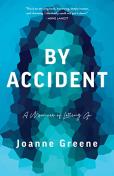

By Accident: A Memoir of Letting Go
by Joanne Greene
Paperback : 192 pages
0 club reading this now
0 members have read this book
Introduction
Joanne Greene grew up in Boston during the 1960s and ’70s, a turning point for women in the United States. Doors were opening wider, and Joanne walked through as many as she could. As a young woman, she dove headfirst into San Francisco radio and television, and went on to host and produce award-winning feminist and other timely features and talk shows for decades. Throughout, she worked at having a great marriage and being an exemplary parent. But underlying her high-achieving life was a sometimes-destructive need for control.
Vulnerability and dependency were okay . . . for other people. Joanne’s value was tied to how in charge, how together, and how productive she was. Then she suffered a traumatic accident—and it set her on a journey of discovery that taught her true power came in the still moments, the moments when she not only loosened her grip but even allowed herself to crack. In fragility, Joanne found, there was beauty—and possibility, too.
By Accident is a story about discovering that control is a seductive illusion and how letting go of the need for it can reveal great strength and lead us to even firmer ground.
Editorial Review
No Editorial Review Currently AvailableExcerpt
Two Being hit by a car is not my first blow—although it’s probably the most literal—and it won’t be my last. But it will be a catalyst for me, a sudden graphic stop to my constantly in-motion existence, my need to produce and achieve to feel worthy of love, my need to control everything because I’ve believed that it would make me safer. It will be the test that finally teaches me that my needs are masks, and that control is an illusion. I’ve had plenty of opportunities—losses, hard ones—to learn to let go. But I grieved my losses and went right back to my old ways. The accident has stripped me, made me totally dependent on others, put cracks in my bones and revealed cracks in my armor. I can’t go back to my old ways, not easily, anyway. Over time and through a series of other physical and emotional challenges, I will discover that losing control can be the best way to truly gain it. Letting go means letting in light, revealing my real power, and, finally, feeling that deep sense of peace that I’d been desperate to find. I’m being wheeled into the emergency room, and medical personnel are moving quickly, ordering tests, assessing my injuries. My eyes dart furiously back and forth, searching for Fred, my lifeline. He is right beside me, his beautiful green eyes clouded with tears. He puts his hand on my arm, and his palm is sweaty. His palms never sweat. The morphine is holding the pain in check, and I’m outside of my body, looking down at this scene. Someone looks at my x-rays and says, “Three pelvic fractures. No, look, there’s a fourth.” I feel oddly pleased. Not faking or even exaggerating this time. More than once, as a child, I remember convincing my parents to take me to the emergency room at Beth Israel Hospital in Boston for an x-ray after bruising my knee or my elbow. It was a way to get out of the house. I was always in search of action and excitement because I felt trapped in our boring household. We went out to eat periodically—for Italian food, Chinese, or seafood if there was an occasion for it—and visited my grandparents, but other than that, my day-to-day life was uneventful. The hospital, in contrast, was a cheap thrill for a kid who craved action. I hoped the bone would be broken so I’d have a cast that everyone at school could sign, but only once, in the fifth grade, was there actually a fracture. Lisa, the cantor’s daughter, and I had been sent to the principal’s office at Hebrew school for talking in class—I was always talking in class—and when the bell rang and we darted back down the hall to head home for dinner, she slipped and fell on top of me. “Ouch!” I cried, clutching my left wrist, which had been slammed to the ground. Lisa kept saying she was sorry, that she didn’t mean to knock me over. When I complained about the pain at dinner and didn’t eat a bite of my spaghetti, my mom determined that this warranted an x-ray. The cast that was applied to my fractured wrist was yellow. Now I have four pelvic fractures. This is legit. view abbreviated excerpt only...
Discussion Questions
From the author:a. “You can visit the pity pot, but don’t be packing your bags and moving in.” This advice was given to Joanne by a friend early in her recovery. What does this mean to you, and would you find it helpful if you were incapacitated and in pain?
b. What’s one important lesson that Joanne learned after a few weeks home from the hospital? Is this something you would already have known?
c. What tools does Joanne utilize to get through her most challenging moments? Would these tools work for you? What other tools might you employ to deal with feeling isolated, dependent, pain, and grief?
Book Club Recommendations
Recommended to book clubs by 0 of 0 members.
Book Club HQ to over 90,000+ book clubs and ready to welcome yours.
Get free weekly updates on top club picks, book giveaways, author events and more