




BKMT READING GUIDES
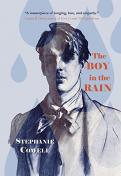

The Boy in the Rain
by Stephanie Cowell
Paperback : 310 pages
0 club reading this now
0 members have read this book
Introduction
“The Boy in the Rain transports us to another time and place in this powerful, sensual, and lyrical novel that literally took my breath away—the love is so visceral, the pain so deep, the beauty so real, and the danger so palpable!” ~NYT bestseller, M.J. Rose, author of The Last Tiara
It is 1903 in the English countryside when Robbie, a shy young art student, meets the twenty-nine-year-old Anton who is running from memories of his brutal childhood and failed marriage. Within months, they begin a love affair that will never let them go. Robbie grows into an accomplished portraitist in the vivid London art world with the help of Anton’s enchanting former wife, while Anton turns from his inherited wealth and connections to improve the conditions of the poor. But it is the Edwardian Era, and the law sentences homosexual men to prison with hard labor, following the tragic experience of Oscar Wilde. As Robbie and Anton’s commitment to each other grows, the world about them turns to a more dangerous place
Editorial Review
No Editorial Review Currently AvailableExcerpt
BEFORE THE SCENE [Occurs early in the book]: Art student Robbie has come to live in the English countryside outside Nottingham to lodge with an elderly vicar and study for his university examinations. He falls in love with Anton, his well-off, worldly neighbor who lives in a nearby farmhouse and they have a deep secret love affair for four months. But Anton’s wife from whom he is separated comes to Nottingham and with much sadness, he tells Robbie that he is going to reunite with her and live “a normal life, not always hiding and in the shadows.” Robbie is devastated. ************************** Robbie didn’t sleep that night but lay awake listening to the wind. The next morning, he rose at dawn and wandered to the farmhouse as near as the big tree and stared at its dark windows. No one came in or went out. Robbie thought, He’ll look out the window and call me up any moment. The truth returned and dissolved again in the confusion of his mind. He would forget what had happened and then would remember. He didn’t understand where he stood or what hour it could be. His pocket watch had stopped. What had happened in the three days before the vicar had left and Anton had sent him off to see the play? Anton had been moody; a few times he was lost in thought. He had disappeared at times for hours; returning, he would explain, “errands” or “business.” He had drawn Robbie against him on the study sofa and kept him close, and when Robbie wanted to rise for some water, Anton had said tenderly, almost pleadingly, “No, stay here.” In what hour then did the reconciliation with his wife occur? There was silence in the farmhouse. Some rubbing and banging came from the kitchen. He found the housekeeper Mary polishing the kitchen grate and asked as lightly as he could, “Have you seen Mr. Harrington?” Her honest, round face looked at him. “But surely you know, Mr. Stillman,” she replied. “Mr. Harrington’s with his wife in the Nottingham Arms.” “Ah yes, of course,” he replied. He and Anton had always been careful before Mary, the serious, lanky, and round-faced local girl who came twice a week. She smiled at him; she guessed nothing. But how had Anton gone away? Both horses were in the stable. Had Anton walked to the city suddenly, furtively, softly on the leaves? There was no use staying here. Robbie left the house so heavily he could hardly continue down the path. That night, he couldn’t bring himself to undress. Yet after he had managed to fall asleep for a few hours, he woke with the thought, Well, it can’t last, because it’s me he loves. By tonight he’ll be back. In the morning he drew Anton from memory by the rainy light and then buried his head in his hands. By dinnertime he began a letter to his uncle saying he wanted to come home and tore it up. The bit of kidney pie hardened at the edges, the tea grew stewed and cold in the pot, sugar congealed in the plate of apples. The promise to visit the sick neighbors and shop for them never entered his mind. And no letters came. On the third day he woke from a late-afternoon exhausted sleep and knew he must go to the city and bring Anton home again. He had bicycled to Nottingham several times with Anton. He knew the hotel, a heavy early-Victorian building with its bricks already darkened with city dirt. Inside was the plush restaurant that served such a large, comfortable tea. Robbie jumped on his bicycle and rode past the familiar houses. Darkness was coming soon this winter evening. He felt the cold sting his neck. Perhaps in a few hours he and Anton would both be home again. At last, the ornate hotel rose up before him. He parked his bicycle and hurried to the hotel desk to ask for Mr. and Mrs. Harrington though the specific words made him sick to say them. “They are expecting me,” he added to the clerk. “I’m Mr. Langstaff’s pupil.” Everyone knew Mr. Langstaff. The clerk nodded and gave him the room number. He mounted the two flights of stairs and made his way down a narrow, carpeted hallway. Number 24, he thought. He stood before the door. He had planned what he would say. He would be calm; he would be gentle. He would try to take her feelings into consideration. He would say, “I’m sorry, ma’am. It’s not your fault. It’s just it’s me he loves now.” He knocked. There was no answer. He knocked again. The echo of his knocking on the locked study door a few nights before haunted him, but this time no one came out. Robbie stuck his hands into his pockets and made his way down to the lobby again and the desk clerk. “Ah, young gentleman, so sorry!” the man said. “It’s been a busy day. Mr. and Mrs. Harrington left an hour ago.” “They couldn’t have,” Robbie said. “Yes, they did.” “Where did they go?” “Why, they were leaving for the train station. I believe I heard her say London, then Paris. Imagine, so far away.” But in the station the train to London had left. Robbie grabbed his bicycle again. He was crying so hard he could barely see. He rode into the vicarage garden, leaned his bike against the wall, and ran up the stairs into his room, where he seized the floral water pitcher and basin, shattering them into a hundred sharp fragments against the wall. Water seeped into the carpet and across the sketches he’d tacked around the dresser mirror. He took Anton’s shirt from the bed and ripped it to shreds. Then he locked the door, holding the bits of fabric in his arms and rocking them. Nellie’s call rose querulously from below. “What clatter! Lad, not a bite of supper?” He gritted his teeth. Blocking the door with his body, he pulled the quilt from the bed and lay down on the floor. After a time, darkness came. view abbreviated excerpt only...
Discussion Questions
From the author:1. Anton and Robbie are much in love but human and imperfect. They adore each other but also hurt each other. In the beginning, Anton is the older, more worldly one, and holds most of the power. This changes on and off until several years into the relationship, Robbie cries out in frustration. “Have you ever needed me for anything? Will I always just be your boy” Discuss the balance of power (love, sex, money, letting the other person grow) in relationships you see around you. If one person changes, how does the other adjust?
2. How do Robbie and Anton change and what path do you see which leads to the end of the novel, what decisions that will eventually lead to the last pages?
3. Do you know any man (or woman) who tried to remain in a heterosexual relationship to please their families, or deny their feelings? What happened to them when they “came out of the closet?” What happened to their former wife or husband?
4. From the very earliest days of their meeting, Robbie and Anton encourage each other’s goals. Do people often help their partners to the partner’s goal, even when it is a hardship for the giver or can end in an impossible place?
5. Anton changes when he goes back to his fighting for socialist ideals. Do you know anyone who has made such a life decision? Who perhaps had the courage to face all his old demons and become something remarkable at any age?
6. The novel asks questions about socialism, wealth, and responsibility. We are still trying to balance these things today. In the Edwardian years and much before, poverty was heartbreaking. Anton wishes to tax the wealthy to give basic food, medicine and old age pensions to the poor. But as the Baron points out, such taxation will eventually bring down the great houses such as Downton Abbey. The wealthy owners will not even be able to afford them. What did these new taxes mean for such a family as the Crawleys of Downton?
8. The fight for LGBTQ rights still goes on in parts of America and the rest of the world. Why do you feel the right to love who you love is still in debate? Why are people so afraid of it
Book Club Recommendations
Recommended to book clubs by 0 of 0 members.
Book Club HQ to over 90,000+ book clubs and ready to welcome yours.
Get free weekly updates on top club picks, book giveaways, author events and more