



BKMT READING GUIDES
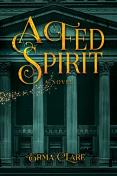

A Fed Spirit
by Erma Clare
Paperback : 354 pages
0 club reading this now
0 members have read this book
Stella, a current long-time executive in the Research Department, has devoted her career to ...
Introduction
Prepare to enter the enigmatic world of a Federal Reserve Bank with Lucy, an employee in its early days who has haunted its Research Department ever since her death there over a century ago.
Stella, a current long-time executive in the Research Department, has devoted her career to the Fed’s public mission and believed that her years of successful work had earned her job security.
However, when Wendell becomes her boss and begins implementing his own vision for the Department, Stella isn’t included in his plans.
Despite clashing with Wendell, Stella is oblivious to the threat to her job until it’s too late. And when a personal tragedy coincides with the termination of her job, Stella’s faith in the Fed is shaken.
As Lucy shares moments from her own life in the early 1900s, she offers a distinctive view of Stella’s situation while challenging readers to question their own understanding of the source of the Fed’s power in its work to support a healthy U.S. economy.
Editorial Review
No Editorial Review Currently AvailableExcerpt
Lucy Your willingness to trust those you’ve never met is both a wonder and a fright. I’ve been among some of those you’ve trusted since I died, here, in a Federal Reserve Bank, in 1915. I’d come to see Mr. Myers. He was my boss during the months I worked here as a Secretary and a friend afterwards. Ever enthralled by his role in opening this Federal Reserve Bank the November before, he’d written an essay about the Fed Bank’s promises and challenges for my new baby’s commonplace book. Creating commonplace books for our babies was a tradition in my family. Three-quarters was filled at the baby’s birth with all sorts of information, while one-quarter was filled when the child’s interests emerged. I’d brought the commonplace book with me that day and am certain it is that book that’s held me here rather than anything to do with this Fed Bank. However, as time’s gone on and I’ve wished for meaning of my inexplicable existence, I’ve suspected such meaning would have to do with this Fed Bank. Though I first sought inspiration in the tale of Mr. Jacob Marley, who dragged his chains and frightened Scrooge into sharing his money, I’ve no flair for drama nor the willingness to frighten others. But finally, it is your willingness to trust that inspired my search. Your trust is a wondrously powerful enabler of the evolution of your financial system. First, there was trade. When the shoemaker and bread baker first decided they would trust one another’s skills and trade shoes and bread, each gained some time. The shoemaker might have used his found time for leisure, the bread baker to make cake. Then, the use of money emerged to facilitate trade. A dentist wanting a quart of strawberries and a strawberry farmer with a toothache would no longer need to find one another. But using money assumed trust, since you probably wouldn’t exchange your labor for money if you didn’t trust the money could be traded for what you needed or wanted. Societies define what serves as money. First, and most importantly, it must be a medium of exchange. The dollar you use to buy a quart of strawberries must be the same dollar that the grocer or farmer wants. Second, it must be a standard of value. The dollar in your pocket can be traded for no more or less than the dollar in your neighbor’s pocket. Third, it must be a reasonable store of value. The dollar in your pocket today can be traded for not too much more or less than the dollar that might be in your pocket a year from now. These requirements came about by trial and error, some of which are memorialized through slang, such as calling a dollar a “buck” as a legacy of when deerskins served as money. The dollar in use, the Federal Reserve Note, has been around a bit over a hundred years. Each Note is signed by the Treasurer of the United States and the Secretary of the Treasury. Though few think about what “Federal Reserve Note” means or who those people are, most using the Notes trust they mostly meet the three requirements of money. Most of you trust commercial banks enough to store your money as electronic bits of information and you trust in the bits’ convertibility back to dollars. That trust is so important that the Federal Deposit Insurance Corporation puts the full faith and credit of the U.S. government behind those commercial banks, to a limit. The Treasury, the Fed System, and the FDIC are all creatures of Congress, so there’s another layer of trust. It is ironic that the only trust a Federal Reserve Note calls for is trust in God and it’s only done so since 1957. I don’t think God worries much about our money. When I was alive and reliant on money, I didn’t pray to God about it, though I did for purchasing power. I believe God gave humans free will and it’s those humans with free will who decide our means of trade. I don’t think there’s much use in trying to divert an accountability for money to God. Though money enters most everyone’s thoughts for at least a few seconds each day, those thoughts take the form of wondering can a boss be trusted to pay a fair wage, a bank be trusted to maintain working ATMs, or one of the myriad other pesky intermediaries be trusted to exercise their free will in an ethical and moral way. Those thoughts are not likely to include wondering about the folks in the layers described above. Even if they occasionally do, few have the time to distill speeches and meeting minutes that describe the Federal Reserve’s Federal Open Market Committee’s decisions about interest rates. And those who purport to do it for others cannot always be trusted to put aside their own agenda. Of course, there are some for whom that trust is the subject of their life’s work, either by concern for it or the search for opportunities to exploit it. But who among those can be trusted. In the late 1980s, then U.S. President Ronald Reagan brought the Russian proverb, “Trust, but verify,” to the U.S. lexicon. How would one even begin to verify the financial system? I lack the answer but believe a starting place might be appreciating how the trusted become so. This tale is about imaginary staff in a Fed Bank’s Research Department in 2018 and 2019. You trust their real-life counterparts by virtue of your reliance on dollars. Most everything written in the Fed System carries a disclaimer. A sure sign I’ve been here too long is that here are mine. I don’t know if I skip time or time skips me, but sometimes, I’m not here. I don’t go anywhere else, I’m just not. So this spun-up story has as many holes as Swiss cheese. I think that’s acceptable, since you’re meant to be left with more questions than answers, and if you find that an irritant, I’ll remind you that some of our philosophers framed wisdom in knowing what you don’t know. Regardless of whether it’s spun-up or accounted-for truth, the representation of one Research Department in one Federal Reserve Bank has no more power to describe the Federal Reserve System than does one cookie describe a bakery with a dozen cookies that are small or large with chips or nuts or none, a dozen cupcakes with and without cream in the middle with a little or a lot of toppings, a dozen muffins each with different berries or nuts and some with and some without a crumble topping, a dozen donuts frosted in a rainbow of colors and chocolate and some with sprinkles, a few gluten-free or sugar-free items, and a many-tiered wedding cake embellished with sparkly sugar and figurines and seven types of frosting and flowers from both a greenhouse and a backyard. At least as long as that one cookie hasn’t, say, been served after falling in mop water. My name is Lucy. Come. I’ll introduce you to the staff. view abbreviated excerpt only...
Discussion Questions
From the author:1. The story begins, “Your willingness to trust those you’ve never met is both a wonder and a fright.” Do you agree?
2. Was any of the information about the Federal Reserve new or a surprise to you? Is the information useful to you?
3. About Everett’s letter for their son, Lucy describes being “grateful with the kind of gratitude that is a shock of sorts, when something important and good happens only because one failed in their own best intents.” Have you experienced that kind of gratitude?
4. With the Federal Reserve’s dual mandate for jobs and stable prices in mind, what would you tell the Fed’s Research Departments to research?
5. Have you ever kept a commonplace book, journal, or scrapbook? Do you imagine it being discovered after your death? Have you inherited one from someone else?
6. Stella tells Adam she doesn’t remember the file he gives her. Did you think she wrote it anyway or that Lucy wrote it?
Book Club Recommendations
Recommended to book clubs by 0 of 0 members.
Book Club HQ to over 90,000+ book clubs and ready to welcome yours.
Get free weekly updates on top club picks, book giveaways, author events and more