



BKMT READING GUIDES
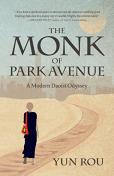

The Monk of Park Avenue: A Modern Daoist Odyssey (A Taoist’s Memoir of Spiritual Transformation)
by Yun Rou
Paperback : 256 pages
0 club reading this now
0 members have read this book
“...this book will completely absorb your attention from the beginning...” —Emanuele Pettener, PhD, assistant professor of Italian and writer in residence at Florida Atlantic University
#1 New Release in Chinese Poetry, Asian ...
Introduction
Priceless Wisdom from a Modern Tao Te Ching Odyssey
“...this book will completely absorb your attention from the beginning...” —Emanuele Pettener, PhD, assistant professor of Italian and writer in residence at Florida Atlantic University
#1 New Release in Chinese Poetry, Asian Poetry, and Tao Te Ching
A literary memoir like no other, Monk of Park Avenue recounts novelist and martial master Monk Yon Rou’s spiritual journey of self-discovery. Learn from Yon Rou as he tackles tragedy and redemption on an unforgettable soul-searching odyssey.
A spiritual journey with extraordinary encounters. Yon Rou’s memoir is a kaleidoscopic ride through the upper echelons of New York Society and the nature-worshipping, sword-wielding world of East Asian religious and martial arts. Monk of Park Avenue divulges a privileged childhood in Manhattan, followed by the bitter rigors of kung fu in China and meditations in Daoist temples. Join Yon Rou’s adventure as he encounters kings, Nobel laureates, and the Mob. Witness this martial master’s incarceration in a high-mountain Ecuadorian hellhole and fight for survival in Paraguay’s brutal thorn jungle.
Meet celebrities along the way. A story of love, loss, persistence, triumph, and mastery, The Monk of Park Avenue is peopled with the likes of Milos Forman, Richard Holbrooke, Paul McCartney, Warren Beatty and now-infamous opioid purveyors, the Sackler Family. Yun Rou’s memoir is no mere celebrity tell-all, but a novelist and martial master’s path to self-discovery.
The Monk of Park Avenue offers you:
Paths for personal and spiritual growth
Anecdotal stories of self-discovery and insights into how to live
An eloquent, candid exploration of spiritual transformation
If you loved Zen and the Art of Motorcycle Maintenance, To Shake the Sleeping Self, or Lao Tzu by Ursula K. Le Guin, you’ll love The Monk of Park Avenue. Also, be sure to read Monk Yon Rou’s Mad Monk Manifesto, winner of both the Gold & Silver 2018 Nautilus Book Award.
Editorial Review
No Editorial Review Currently AvailableExcerpt
Chapter 1 My birth name is Arthur Rosenfeld, and the year is 1959. I’m two years old, and I spike such a fever that my father is convinced I’m going to die of spinal meningitis. Other children with such symptoms are given sponge baths and Tylenol—now known to kill the liver in even modest doses—but because my father is a soon-to-be world-famous cardiologist, I’m rushed to the hospital and laid out, naked and face down, on a metal table. My bare chest, belly, and thighs pucker against the cold surface and my budding manhood shrinks. I cry and scream and soon discover what all fighting arts teach, namely that I’m stronger contracting than expanding. It takes four full-sized adults to restrain me while a doctor, prognosticating darkly, presses a long, thick needle into the meat of my spine and extracts from it, without anesthesia, a measure of fluid, precious and clear. My position gives me a one-eyed view of the world during this procedure. I see my father’s agonized expression. I see tall, green, paint-chipped bottles of oxygen. I see lots of white shoes and a stainless-steel cart on wheels bearing a tray that bristles with syringes, clamps, and gauze pads. I see the broad, scrubbed fingernails and extruding forearm tendons of the men leaning heavily on my limbs. It later emerges that I’m not going to die but merely have the flu. To this day, I remain sore at the spot of that needle’s entry, though that soreness may be no more than the sort of rebellious phantom that plagues an amputee home from war. I believe its lifelong presence then kindled, and now feeds, a strong empathetic kinship with the forced, helpless, and oppressed. That needle set the stage for a certain vigilance robustly hardwiring my brain for self-preservation. The moment that needle was forced into me, I became a compassionate warrior. I might have come to compassion even without the trauma, given that it runs in my family of doctors. A couple of years after the spinal tap, when I’m four and watching my Jewish father perform what is for him the holiest of holy religious rituals—the swapping of a heavy overcoat for the white one awaiting him in the Doctor’s Coat Room at New York Hospital. This somber, sacred, and self-congratulatory donning is performed in the company of other men who also wear shirts, ties, and stethoscopes, the latter usually slung around their necks, though my father’s is looped and stuffed into his coat pocket. My father tells me that he has waited a long time to bring me into this inner sanctum. Preparing to sally forth in the vestments of hope, godliness, and power, he tells me to wait patiently for him as he saves lives. I perch on a dusty, overstuffed couch positioned between faux Tiffany lamps and employ crayons and a coloring book in my battle with the excruciatingly slow passage of time. The carriage clock on the mantelpiece ticks loudly. I look up expectantly each time the door opens, but despite the number of doctors coming and going, I do not see my father. In fact, he is gone for hours. During this interlude, and indeed during the rest of my childhood, I, the son of an anointed man, construe that I’m in training to be anointed myself. I close my eyes and imagine the early priests of my inherited faith dispatching judgment and decrees on Jerusalem’s Temple Mount. I see these divine interlocutors wearing not white coats but white robes, as that is the way they are rendered in a children’s book about the Bible that my mother, Camilla, a student of both philosophy and religion, has given me. There is no evidence of the organic world of which doctors and patients alike are a part of in this coatroom, and there is certainly no hint of the frogs, turtles, halberds, spears, swords, jungle plants, bearded monks, and snow-capped Chinese peaks that will, years from now, be the trappings of my own path to service. Everything is cold and clinical here even though the building’s heating pipes click and pop with contained steam. Despite some of the best of intentions, this is a world built on the hubris of men, a castle built to wall off our entire species from the rest of the world, for doctors have been told—biblically, not just in medical school—that they have dominion over all. No women are in evidence. My father returns and we make our way to the hospital garage and his pea-soup-green Plymouth. When it becomes clear we are not heading home, he tells me that we must make a house call because someone’s heart is sick. He says I will have to wait in the car, or maybe, if the patient is stable, in the kitchen. Somewhere along Manhattan’s East River, he stops short to avoid rear-ending the car in front of us and I’m propelled face-first into the metal dashboard. I’m sucking my thumb at the time, wearing a deerstalker cap and a camel-colored car coat with broad tortoise-shell buttons. I bite the flesh of that thumb, bruise my teeth, get a swollen forehead, and cry, as much from surprise as pain. Looking stricken, my father jams the gearshift lever into park and leans in to tend me. The car rocks back and forth as the transmission protests such rough treatment. Seeing my father so worried, I resolve to protect him so he can continue being a god. I understand that my father and I are taking care of each other. Somehow, I know that it’s a formative moment. This kind of knowing, I dimly realize, is not very common for kids my age. view abbreviated excerpt only...
Discussion Questions
From the author:1. The book reveals that the Author is a Daoist monk. What is Daoism?
2. Many “celebrities” show up in the first couple of chapters. How do you believe this affected Monk Yun Rou at an early age?
3. What do you believe is the connection between martial arts and spirituality?
4. The Monk of Park Avenue chronicles tousles with the Mob, enduring both mortal illness and family tragedy, adventures in Hollywood, and experiences in Chinese temples. What lessons might readers take from what Monk Yun Rou has been through?
5. Monk Yunrou is more than a little hard on the way we treat each other, other sentient beings, and the planet. Where does this harsh view come from and what specific changes must we make in order to stop the terrible spiral in which we find ourselves as a species?
Book Club Recommendations
Recommended to book clubs by 0 of 0 members.
Book Club HQ to over 90,000+ book clubs and ready to welcome yours.
Get free weekly updates on top club picks, book giveaways, author events and more