




BKMT READING GUIDES
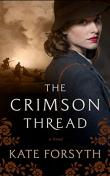

The Crimson Thread
by Forsyth Kate
Hardcover : 350 pages
2 clubs reading this now
1 member has read this book
May 1941. German paratroopers launch a ...
Introduction
In Crete during World War II, Alenka, a young woman who fights with the resistance against the brutal Nazi occupation, finds herself caught between her traitor of a brother and the man she loves, an undercover agent working for the Allies.
May 1941. German paratroopers launch a blitzkrieg from the air against Crete. They are met with fierce defiance, the Greeks fighting back with daggers, pitchforks, and kitchen knives. During the bloody eleven-day battle, Alenka, a young Greek woman, saves the lives of two Australian soldiers.
Jack and Teddy are childhood friends who joined up together to see the world. Both men fall in love with Alenka. They are forced to retreat with the tattered remains of the Allied forces over the towering White Mountains. Both are among the seven thousand Allied soldiers left behind in the desperate evacuation from Crete's storm-lashed southern coast. Alenka hides Jack and Teddy at great risk to herself. Her brother Axel is a Nazi sympathiser and collaborator and spies on her movements.
As Crete suffers under the Nazi jackboot, Alenka is drawn into an intense triangle of conflicting emotions with Jack and Teddy. Their friendship suffers under the strain of months of hiding and their rivalry for her love. Together, they join the resistance and fight to free the island, but all three will find themselves tested to their limits. Alenka must choose whom to trust and whom to love and, in the end, whom to save.
Editorial Review
No Editorial Review Currently AvailableExcerpt
VII The walls of her uncle’s lyra shop were made of rough stone, and hung with stringed instruments of all shapes and sizes. Mandolins, bouzoukis, baglames, zithers, lyras. Black-and-white photos hung crookedly from nails, a blue shirt and headscarf were flung over the back of a chair, and a shepherd’s crook made from wonderfully gnarled wood leant against the wall. An old table stood in the centre of the room, with tools scattered upon it, a lute mould, coils of catgut and wire, tattered rolls of music, curling spirals of wood shavings, a gluepot with a brush still in it. Alenka frowned. It was not like her uncle to leave his shop in such a mess. He had been interrupted at work. She tried the handle of the back door, but it was locked. The young man sat down on a stool abruptly. ‘Let me see.’ Alenka came towards him. He lifted away his bloody hands. She saw a jagged hole in the smooth olive skin of his abdomen. His tunic was stuck to it in places and Alenka tried to lift it away, only for him to jerk and curse in pain. ‘Wait a minute.’ She looked around. A wine jug stood on the side- board. She poured the wine into the old pewter mug nearby, then eased the shutters open. She could see water splashing into the fountain only a few strides away. Yet her legs trembled, her breath was unsteady. She did not dare try and fill her jug. She looked back at the Australian soldier. He was holding his stomach with both hands. Blood was seeping through his fingers. He looked up at her. His eyes were dark and full of shadows. She thought about how he had swung her away from the gunfire, shielding her with his own body. Alenka took a deep breath and slipped out through the shutters. The sound of explosions and gunfire. Smoke caught in her throat, stung her eyes. Alenka crept forward. Germans soldiers were breaking down a door opposite, shouting to each other. Alenka dropped to her knees, crawled to the fountain, filled her jug, then crawled backwards, trying not to slop the water. A harsh order made her jump. She looked around. No-one had noticed her. She scuttled back to the safety of the lyra shop. Her heart was pounding as if she had run up Mount Ida. The dark-eyed soldier was slumped on the stool, hands pressed over his stomach. Alenka cut his shirt away. The bullet had passed through his abdomen, just above his hip, exiting out through his back. She felt a rush of relief. She had been afraid she would have to try and dig the bullet out of him. She made a pad with the cleanest parts of his shirt, then used her scarf as a bandage, winding it carefully about his narrow torso. Then she tended the wound at his temple. The bullet had creased the skin of his scalp, and nicked his ear. She washed his face clean, then bandaged it with her uncle’s black beaded headscarf. He was shivering, so she brought him some wine and her uncle’s shirt. He drew it on thankfully, buttoning it up. ‘Th-thank you.’ He sipped the wine eagerly, then held the cup out to her. She was very thirsty. The wine soothed her dry throat and calmed her. She drank deeply, passed him back the cup, and he drank again. ‘You saved my life,’ she said. ‘Thank you.’ ‘It was n-n-n- . . .’ He struggled to speak, his face contorting, and at last managed to say ‘. . . nothing.’ ‘You might not remember, but we have met before. You know, the snake.’ ‘I-I-I remember. Of course I remember.’ His dark eyes were steady on her face. Alenka went red. ‘I was not very polite to you. You came to see Knossos, and I turned you away. I’m sorry.’ ‘No . . . no . . .’ He paused, trying to steady his voice. ‘You thought you were alone. You were d-d-dancing . . . of course you did not want a stranger watching you. It . . . it’s me who is sorry.’ ‘I thought the ruins would be empty and no-one would see. It’s just so hard to get any privacy where I live. I have a little brother who is always spying on me and telling tales, and, well, my mother does not approve of the foxtrot.’ ‘Nor of amorous Aussie s-s-soldiers, I’m sure.’ She blushed even redder. ‘You mean?’ ‘M-m-my best mate is Teddy Lloyd. I saw him just after I saw you. He said he was taking you out d-d-dancing. Or at least, I thought it must be you.’ ‘Oh.’ Alenka had thought the amorous Aussie soldier he meant was himself. ‘But how did you know Teddy was talking about me?’ ‘Because you are so b-b-b- . . .’ He struggled for a moment, then said in a stammering rush, ‘beautiful.’ Her cheeks burned. ‘T-T-Teddy called you a dish. That’s the highest possible praise from him, and I . . . I . . . I promise you, he’s a c-c-connoisseur.’ She busied herself tidying up his torn and bloodied shirt. He looked contrite. ‘Sorry, I didn’t mean to em- . . . embarrass you.’ ‘Po-po-po-po-po,’ she said. ‘What’s your name?’ ‘Lieu- . . . Lieutenant B-B-Benedict John Hawke, at your service, ma’am,’ he replied, trying to smile. ‘Though my friends call me Jack.’ ‘I like Benedict. It’s like a blessing.’ He gave a wry twist of the mouth. ‘It d-d-does not suit me, though. It c-c-comes from the Latin . . . b-b-bene meaning good and dicte meaning to speak . . . as you can hear, s-s-speaking well is n-n-not something I can d-d-do.’ ‘My mother is the same. She makes me think of that line from Sappho, My tongue is broken . . .’ ‘Yes. That’s it exactly.’ Jack gazed at her in wonder. There was some- thing about the intensity of his gaze that unsettled her. She thought of the rest of Sappho’s poem. And through and through me . . . ’neath the flesh, impalpable fire runs tingling . . . ‘How do you know Teddy?’ she asked. ‘We c-c-come from the same tiny country town, called Woodend. It . . . it’s near Hanging Rock in central Victoria.’ ‘Is it called Hanging Rock because people were executed there?’ He shook his head. ‘No. It’s because there’s this rock, s-s-suspended like a lintel over a magical doorway. It’s a rather eerie place. Watches stop w-w-working there . . .’ ‘So how did you become friends?’ ‘T-T-Teddy’s family have a big property there. My nana used to teach his sister piano. I’d go out to the farm with her, ’cause there was no-one else to l-l- . . .’ He paused, struggling to make the words, his mouth contorting. ‘. . . look after me. I-I-I-I’d sit on the step and read till she was finished.’ He looked very pale. He leant one elbow on the table and supported his head upon it. ‘One . . . one day I was sitting there, reading, when Teddy came bounding up. He said, “Aren’t you b-b-bored?” He didn’t wait for me to answer, but yanked me up and said, “Let’s go hunt snakes.” I was t-terrified of snakes but didn’t want him to know. So when he grabbed a big stick, I did too, and we . . . we went and poked our sticks in a hole, and a red-bellied snake came out and b-b-bit me. Snakes are p-p-poisonous in Australia, remember.’ She nodded and smiled. ‘I-I almost died. Teddy had to help me b-b-back to the farm. My nana cut out the poison which is why I have this s-scar . . .’ He showed Alenka the thick welt on his arm, and she put her hand on her own scar, nearly as wide and jagged. ‘Teddy’s f-f-father was very angry. He hit Teddy, and m-m-made him ride for the doctor. I had to stay at the f-f-farm till I got better. Teddy was swotting for his exams, and I . . . I . . . I helped him. Then I got a scholar- ship . . . and went to school with him ’ His voice was fading. Concerned, Alenka bent over him. Suddenly the shutters banged open. A German paratrooper stood in the doorway, rifle raised. He was very young, but anger and determination were in every line of his face and body. Alenka gave a little scream and jumped up, hands raised. ‘Nein, bitte!’ He answered angrily. The only word she recognised was ‘Englisch’. ‘Nein, nein!’ She tried to remember the German word for ‘Greek’. ‘Griechen,’ she said. He jerked his gun at her and she repeated the words in desperate haste. ‘Nein, bitte, Griechen, Griechen!’ The soldier moved forward so swiftly she only had time to tumble from her stool and try to fend him off. He seized her collar in one hand and tore it away. Alenka screamed. Jack sprang up, trying to defend her. The German soldier shoved him away. He fell to the floor. Alenka’s dress was ripped from the neck almost to the waistband. She covered herself with both hands, scrambling away, sobbing in fear. ‘Halt!’ The paratrooper caught her and held her still, examining her bare right shoulder. He grunted, then searched her swiftly. Alenka had nothing in her pockets, not even a coin purse. He let her go, then turned his attention to Jack. ‘Englisch,’ he said again, his gun lifted to his shoulder. ‘Nein, mein brüder, mein brüder,’ she gabbled, trying to stop him. He looked from her to him. Jack was black-haired, dark-eyed, olive- skinned. He looked more like her brother than Axel did, she thought wildly, particularly with the Cretan headscarf wound about his brow. ‘Lebst du hier?’ the German asked, gesturing around. ‘Oh, ja, lebst hier.’ He said something else and she shook her head, not understanding. He gave a little noise of frustration, then seized one of the biggest instruments hanging on the wall, thrusting it towards her and Jack. ‘He … he wants us to prove it,’ Jack said, in halting Greek. ‘Prove?’ ‘That we live here.’ Jack got up, both hands raised. Alenka grabbed onto the table for support, faint with fear. Jack gave her a little reassuring grin. He took the instrument from the German soldier. It was a great lyra. Most lyras were small, about the size of a mandolin, and played with bows hung with hawk bells. This fat-bellied instrument was much larger, with four strings instead of three. Made from ancient wood taken from Venetian ruins, it was called a vrondo-lyra, or thunder-lyra, for its voice was deep and moody. He chose a bow. Sitting in the chair, Jack rested the pear-shaped lyra between his legs. Alenka felt a stir of hope. He lifted the bow, drew it across the strings, and a strain of delicate music lilted into the air, a phrase of notes repeating itself again and again. It was so fragile, and yet so ardent, so joyous. A lump rose in her throat. All the hairs on her arms quivered, as if in terror. Yet it was awe and wonder that she felt. This is what music is for . . . He played for three or more minutes, the melody climbing higher and higher, in recurring melodic loops, then the music slowed and circled down once more, like a lark coming to rest upon the warm breast of the earth. A few more tremulous notes, then Jack lifted the bow from the strings. Silence fell. Alenka surreptitiously rubbed the tears from her face. ‘Bach,’ the German soldier said huskily. Jack nodded. The German nodded back, cleared his throat. ‘Wunderschönen. Danke schön.’ He bowed, looked around the little room. Alenka noticed a spread ing blot of blood on Jack’s shirt, and his unmistakable army-issue boots. A rush of fear unnerved her. ‘Ich habe auch brüder,’ the German soldier said, and left. I too have brothers. The relief that followed was so powerful Alenka sank to the floor. She was alive. Strangely, miraculously alive. She stared at Jack. ‘But . . . how?’ ‘It . . . it is like a cello.’ Jack caressed the silky golden body of the lyra. ‘My m-m-mother played the cello. I learnt – to feel near her, I suppose. She . . . she died giving birth to me, so I never knew her. That’s one of her favourite suites. My nana says she p-p-played it every Monday morning, all of it. N-n-not just the prelude.’ A long silence, then he sighed, cradling the lyra like it was a baby. ‘Bach’s Cello Suite No. 1 in G major,’ he said, very low and gruff. ‘The k-k-key of benediction.’ Alenka stared at Jack. ‘But you are so good . . . you should be on the radio . . . playing at Carnegie Hall.’ ‘No.’ Carefully he laid down the lyra. ‘I started too late. It is far too late for me.’ The blot of blood was now a flood. He pressed one hand to his side, then swayed and fell heavily to the ground. He lay motionless in a crimson slick of blood. view abbreviated excerpt only...
Discussion Questions
- The Greek resistance to the Nazis was one of the fiercest of the Second World War, and as a result the reprisals were among the most cruel. Did you know of this aspect of the war?- Were you familiar with the Minotaur in the Labyrinth myth? Did you know it came from Crete?
- The myth is usually retold with the Greek hero Theseus at the centre of the tale, but Kate Forsyth draws upon older matriarchal versions in which the Cretan princess Ariadne is the true protagonist. Did you know that the myth was once much more female-centric? What do you think about the male reframing of the tale?
- In ‘The Crimson Thread’, it is not just the German occupying forces who were capable of doing terrible things – other characters show they too are capable of being monstrous. Did you find this more nuanced aspect of the novel to be surprising? Who was the true minotaur at the heart of the book?
- Who were your favourite and least favourite characters in the book?
- If ‘The Crimson Thread’ was to be turned into a movie, who would you choose to play the heroine Alenka?
- Alenka embroiders secret messages in code and so manages to smuggle out crucial information to the Allies. Kate Forsyth learnt how to embroider so that she could properly describe this ancient feminine art, and now loves it so much she embroiders every day. Why do you think embroidery and other traditional women’s arts such as weaving and quilt-making are considered mere crafts, while men’s creative occupations are more likely to be considered art?
- Have you ever walked a labyrinth? What was your experience like?
Book Club Recommendations
Recommended to book clubs by 1 of 1 members.
Book Club HQ to over 90,000+ book clubs and ready to welcome yours.
Get free weekly updates on top club picks, book giveaways, author events and more