



BKMT READING GUIDES
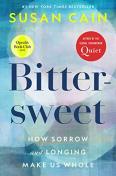

Bittersweet: How Sorrow and Longing Make Us Whole
by Susan Cain
Hardcover : 352 pages
7 clubs reading this now
0 members have read this book
Introduction
#1 NEW YORK TIMES BESTSELLER • OPRAH’S BOOK CLUB PICK • Sadness is your superpower. In her new masterpiece, the author of the bestselling phenomenon Quiet explores the power of the bittersweet personality, revealing a misunderstood side of mental health and creativity while offering a roadmap to facing grief in order to live life to the fullest.
“Bittersweet grabs you by the heart and doesn’t let go.”—BRENÉ BROWN, author of Atlas of the Heart
“Susan Cain has described and validated my existence once again!”—GLENNON DOYLE, author of Untamed
“The perfect cure for toxic positivity.”—ADAM GRANT, author of Think Again
LONGLISTED FOR THE PORCHLIGHT BUSINESS BOOK AWARD • ONE OF THE BEST BOOKS OF THE YEAR: The Wall Street Journal, Mashable
Bittersweetness is a tendency to states of longing, poignancy, and sorrow; an acute awareness of passing time; and a curiously piercing joy at the beauty of the world. It recognizes that light and dark, birth and death—bitter and sweet—are forever paired.
If you’ve ever wondered why you like sad music . . .
If you find comfort or inspiration in a rainy day . . .
If you react intensely to music, art, nature, and beauty . . .
Then you probably identify with the bittersweet state of mind.
With Quiet, Susan Cain urged our society to cultivate space for the undervalued, indispensable introverts among us, thereby revealing an untapped power hidden in plain sight. Now she employs the same mix of research, storytelling, and memoir to explore why we experience sorrow and longing, and how embracing the bittersweetness at the heart of life is the true path to creativity, connection, and transcendence.
Cain shows how a bittersweet state of mind is the quiet force that helps us transcend our personal and collective pain, whether from a death or breakup, addiction or illness. If we don’t acknowledge our own heartache, she says, we can end up inflicting it on others via abuse, domination, or neglect. But if we realize that all humans know—or will know—loss and suffering, we can turn toward one another.
At a time of profound discord and personal anxiety, Bittersweet brings us together in deep and unexpected ways.
Editorial Review
No Editorial Review Currently AvailableDiscussion Questions
Questions from the publisher - added by Pauline:1. What do you think of the Bittersweet idea that “light and dark, birth and death—bitter and sweet”—are forever paired? Does this describe your life experiences? What areas of your life do you now see through a “bittersweet” lens?
2. How did you score on the “Bittersweet Quiz”? Do you tear up easily at touching TV commercials? Do you react intensely to music, art, or nature? Have others described you as an “old soul”?
3. “People play the happy songs on their playlists about 175 times on average, but they play the sad songs almost 800 times,” writes Susan Cain: “They tell researchers that they associate sad music with profound beauty, deep connection, transcendence, nostalgia, and common humanity.” Can you relate to this? What songs do you enjoy listening to? Which are your favorites and why?
4. “Longing is momentum in disguise,” Susan Cain says, “it’s active, not passive; touched with the creative, the tender, and the divine. We long for something, or someone. We reach for it; we move toward it.” What has longing meant to you? What are you longing for: your unique imprint, singular mission, wordless calling?
5. “Connecting with what matters and taking committed action—moves us from bitter to sweet, from loss to love.” Everyone experiences loss. It is part of the human condition. How have you moved “from bitter to sweet, from loss to love”? Are there coping strategies you recommend?
6. Bittersweet can be read as an antidote to a culture of “toxic positivity.” Do you think this term accurately describes our culture? And. if so, how does a bittersweet lens help to counter the pressure to always act positive, no matter what?
7. Who are the artists, musicians, athletes, entrepreneurs, scientists, or spiritual leaders you love, and why do you love them? Do you notice any bittersweet qualities they may possess? What do they represent to you?
8. “An intense awareness of passing time [is] the hallmark of bittersweetness.” This awareness happens during birthdays and anniversaries, graduation ceremonies and weddings—even while looking at old photos. Describe moments when you have experienced “an intense awareness of passing time.”
9. Society often tells us to wear a brave and happy face. But Susan Cain notes: “If we could honor sadness a little more, maybe we could see it . . . as the bridge we need to connect with others.” How have you reacted when you see a stranger crying or a loved one struggling? Why do you think we disguise our sadness or hide our tears?
10. “No matter how distasteful we might find someone’s opinions,” writes Susan Cain, “no matter how radiant or fierce they may appear, they have suffered, or they will.” During these especially fraught times of intense polarization, how can this frame of mind help us heal?
11. The “wounded healer,” a term coined by the psychologist Carl Jung in 1951, is one of humanity’s oldest archetypes. Many people respond to loss by healing in others the wounds which they themselves have suffered. “In Greek myth, the centaur Chiron was injured by a poisoned arrow that gave him terrible pain, but also curative powers. In shamanistic cultures, healers must first undergo an initiation process involving great misery. In Judaism, the Messiah’s powers derive from his own suffering; he surrounds himself with the poor and the sick because he’s one of them. In modern times, wounded healers take more recognizable forms. The bereaved mother of a teen girl dead on the highway founds Mothers Against Drunk Driving. A nine-year old whose father dies of brain cancer grows up to be a grief counselor.” What are some other examples of “wounded healers” today?
12. Our cultural rituals—Fourth of July, New Year’s Eve, Happy Birthday to You—celebrate birth, rather than help us live with impermanence and sorrow. . . . Historically, we see U.S. as the land of abundant resources, the frontier of limitless self-invention, while ignoring the dark parts of the American story. How has the “tyranny of positivity” affected your life? Have you ever felt like “the master of OK”? What do you think this does to us?
13. If you were to write a letter to your younger self, what would you say?
14. Do you remember your first love, or the one who got away? Describe the feeling. How does that enter into your thoughts on relationships and commitment today?
15. How should we live, knowing that we and everyone we love will die? In her book, Susan Cain explores different answers to the experience of grief: Realizing that we’re more resilient to grief than we thought. Learning to let go. And connecting to others through the shared experience of grief. Which of these approaches resonates for you?
16. Portuguese author Valter Hugo Mãe wrote: “It’s urgent to live enchanted.” What does this phrase mean to you? How does it relate to bittersweetness?
17. In Bittersweet, Susan Cain talks about “effortless perfection,” the seemingly easy lives of university students. What other examples of effortless perfection can you pinpoint in our culture, and how might they be changed?
18. Susan Cain shares, “Whatever pain you can’t get rid of, make it your creative offering.” After reading Bittersweet, are you now considering your own creative offering? How has your outlook on pain and longing adapted through the reading of this book?
Book Club Recommendations
Recommended to book clubs by 0 of 0 members.
Book Club HQ to over 90,000+ book clubs and ready to welcome yours.
Get free weekly updates on top club picks, book giveaways, author events and more