




BKMT READING GUIDES
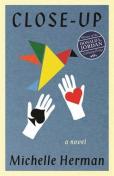

Close-Up: A Novel
by Michelle Herman
Paperback : 376 pages
1 club reading this now
0 members have read this book
In this artful, expansive novel, we follow five protagonists?Jacob, Martin, Caroline, Jeanie, and Jill--through love, marriage, parenthood, and the ...
Introduction
A story about the ties that bind us, Close-Up explores what makes, drives, complicates, and undermines our most important relationships.
In this artful, expansive novel, we follow five protagonists?Jacob, Martin, Caroline, Jeanie, and Jill--through love, marriage, parenthood, and the romance of friendship as they struggle to make sense of themselves and each other and of what makes for good art, good magic, and a good life. What follows is a story only Michelle Herman could write: one of missed connections and old grievances, of loneliness and longing, of rifts and reconciliations and redemption. Close-Up depicts the fraught entanglements of the relationships we’re born into and those we choose?carefully or with abandon?with the precision and nuance that has characterized her work over the last thirty years.
Editorial Review
No Editorial Review Currently AvailableExcerpt
CHAPTER ONE: BARTLEBY The plan was to use the bird in his act, but Jacob didn’t have the stomach for it. The way to make a bird disappear was to dump it into a little pouch, and the only way to get the bird into the pouch was to flip it over very fast, so fast that it—she—would lose consciousness for a few seconds. Jacob’s mother had tears in her eyes. “Oh, sweetheart, that’s awful. No wonder you couldn’t do it—poor thing.” But of course she meant sixteen-year-old Jacob, not the bird. She set her wine glass down and raised her arms to him. Jacob stayed put in the doorway, his own arms folded tight across his chest. His mother’s tears infuriated him, just as they always did (when he was younger, he remembered, he had been touched—sometimes alarmed—by his mother’s crying, but he could not remember why). Mostly he was angry with himself. Why on earth had he paused in the doorway as he passed between the kitchen and his own room and acknowledged that he even saw his parents there? Why had he told them anything at all? “Oh, yes, poor Jakey,” said his father. “Poor kid, he’s so sensitive.” His father’s sarcasm, his mother’s crocodile tears. When he was older, telling the story of the bird—a cockatiel he’d named Dolores because she had seemed so sad—to his new girlfriend, junior year of college (he felt ancient, thinking of the boy he had been four long years ago), he would say that what he pictured when he looked back on his childhood were such moments as these. His parents both expectant in their separate corners, ready for a battle—like boxers. Or like the black and white rooks on a chessboard. (Jacob’s father had insisted he learn to play chess, which he disliked and never played again once he left home for college. What was the point of all that strategy and slyness, of having to think so far ahead, when there was no beautiful effect, nothing to dazzle anyone—no audience to dazzle—at the end of it?) Yes, he could see them still, in their customary poses with their customary props: his father in the big red leather armchair that his mother hated, a thick book in his left hand and a heavy square glass full of amber-colored Scotch and one big ice cube in his right; his mother with her slender paperback and a fragile-looking glass of wine that matched the couch she’d just had re-covered for the second time, in a color she called ecru but that Jacob’s father said was only yellow, Jesus, Gloria, just call it pale yellow for the love of God—why do you insist on such bullshit names for things? Jacob in the doorway itched to get away from them. But he knew that if he bolted, his mother would follow; she would want to talk. And he would want to say, “Leave me alone, would you?” but he would not (if he did, she would begin to cry outright, and the brimming eyes were bad enough). Or he would want to tell her, “Go talk to your husband. It’s his job to listen to you, it’s not mine.” But of course he wouldn’t say that either. It would be cruel, and he wasn’t cruel. (That was his father’s job—or so his father seemed to think.) His mother sitting on the couch, perched at its very edge as if poised for flight. His father reclining, his feet in socks and slippers on the ottoman that matched the leather chair, his birthday present to himself in 1994 when he’d turned forty, the same week his seventh book came out to excellent reviews (Jacob’s mother had said, “No—is this a joke?” when the men delivered the enormous chair and ottoman, and she had wept as the couch, the color of baked salmon then—bittersweet coral, she had called it---and garnished with a row of small, square pillows, seal gray and bone, four of each, as hard and inflexible as teeth, was pushed back against the wall in order to accommodate it). “Other men buy sports cars,” she had told his father, who had laughed and said, “Indeed they do, or else they have affairs with women half their age. So you might be grateful for my midlife good sense.” And he had turned to Jacob, who was fourteen then, and said, “What do you say, kid? Am I right or am I right?” Jacob had kept silent. Anything he said would give one of his parents ammunition for the quarrel he could see was just ahead. Just as he should have stayed silent about the bird. Jacob at sixteen knew perfectly well that if he had been serious about using a bird in his act, he would have bought a dove, the way other magicians did. The way Jackie, who owned his favorite magic shop, had told him to when he’d asked for advice about a bird effect. Jacob knew the difference between a pet and a prop. A dove was not a pet. But that was why he had not bought a dove, he knew. He had kept this a secret from his parents. In his studio apartment a block south of the campus of the college he had chosen for no reason other than that it was hundreds of miles away and big enough so that among the many thousands of his fellow students, there were likely to be plenty who had never read his father’s books, who’d never even heard of Martin Lieberman, Jacob told his girlfriend about how, for his entire childhood, when he’d begged for a pet his father had laughed and said, “Are you kidding? It’s more than enough trouble just to keep you fed and watered.” And how, even at the age of five or six he’d understood that this was meant to be a joke but not why it was funny. By the time he was thirteen, his father liked to say, instead, “I’ll tell you what, kid. When you’re grown and have your own apartment, you can fill it up with seven pairs of clean beasts, seven pairs of fowl, and two of every other living creature.” Was it any wonder he’d concluded that it might be better not to talk at all? His father in particular disliked it when Jacob kept silent. Often he’d refer to him as “Bartleby”—an allusion Jacob would not understand until after he had gone away to college, when he read the depressing nineteenth century short story in a course he took to fill a gen ed requirement for three credit-hours of “literary analysis” (he had chosen the least boring-looking class in which there was no chance that any of his father’s books would be assigned or even mentioned). He would ask himself then if his father had supposed he’d understood the reference all along—but almost certainly he hadn’t, almost certainly his father hadn’t (then, or ever) stopped to think about what his son did or didn’t understand; almost certainly it had been for his own amusement that he would make such observations as, “Bartleby, I see, is keeping his own counsel,” or, “Bartleby would rather not cast pearls before the swine among whom he so grievously remains obliged to live.” What he remembered best about his childhood was his father’s sense of humor, which was mean, and his mother’s brimming eyes. The way his father mocked them both—the way he couldn’t seem to help it, or maybe it was only that he didn’t really even notice them, so how could he care about their feelings? The way his mother sat so upright at the edge of any surface that she perched on, as if she were about to flee. The day he brought the bird home, he’d been so excited he’d called out to both his parents without thinking—and, remarkably, both of them had come, his father from his study, where he had as usual been working, and his mother from the kitchen. They stood beside him while he coaxed the cockatiel out of the cardboard box punched full of holes and into the cage he’d bought and set up on his dresser; the three of them together watched it settle itself in among the bells and balls and multiple assorted perches and the spray of millet Jacob had clipped to one of the cage’s bars, and he told them all about the bird breeder, Veronika, whose ad he had discovered in the Voice’s back page classifieds, and her small apartment downtown full of parrots that spoke with German accents just like hers and what seemed like a hundred other birds, cockatiels and lovebirds and canaries, chirping and trilling, singing, calling out to one another. His bird—the one he had picked out himself—was quieter than all the rest. Contained, composed. More dignified. It was why he’d picked it. Her. But on the ride home on the 1 train, the bird had been so silent and so still inside the cardboard box that he had begun to think that she was sad. “I think you might have been projecting just a little bit,” said Jacob’s girlfriend four years later. He should, no doubt, have returned the bird to Veronika, as she’d asked him to if things did not work out. “Promise me,” she’d said. He’d had one foot out the door by then, the box poked full of breathing holes secure in his hands. “Why wouldn’t things work out?” “Ach,” she said. “Who knows why? Some people are not meant to live with birds, that’s all.” Meant to live! one of her parrots screamed. Another cried, That’s all! That’s all! The rest of them called out, in their German accents, Goodbye, Farewell, See you later, I’ll see you around. He hadn’t made the promise, really—he had only not not made a promise. And now it was just his father and the bird—the poor bird, Dolores, that he’d sworn he needed for his act, but which had ended up as something halfway between a discarded prop and an abandoned pet—alone in the apartment in New York. Dolores in her cage and his father and his many books and his square glass of Scotch and his red leather chair and ottoman that Jacob’s mother never had to see again, and the couch she had re-covered one more time (stripes: eggshell and slate) before Jacob left for college. He had been right about his college. Almost no one here cared about novels, at least not as much as they cared about football. His girlfriend, an English major who wrote poetry, complained that even among those who did—her classmates, her professors—she could count on her fingers those who cared about living novelists, much less poets. Jacob wondered when—or if—he’d tell her who his father was, or even that his father was a writer. He preferred not to. He hoped he wouldn’t have to. “What makes you so sure your father kept the bird?” she asked him. They were sitting on his bed, crosslegged, a pizza box between them. The question shocked him. “He wouldn’t have given her away without asking me first.” “But how can he ask you if you’re not talking to him?” “Exactly,” Jacob said. “Oh, Jacob,” she said. “Why don’t you just call him? What kind of person stops talking to his own father?” “You don’t know,” he told her. “If he were your father, you wouldn’t want to talk to him either.” “I guarantee I would.” “We’ll have to agree to disagree,” Jacob said. “I’ve found that not talking to him has improved my life considerably. I imagine my mother must feel the same way.” “It’s a pity you can’t ask her, then.” If anyone else had said this to him, he would have supposed there was some cruelty behind it. But she didn’t have a cruel bone in her body. When she said “it’s a pity,” that was what she meant: she actually pitied him. For a little while they were both silent. Then she said, “Jacob? Tell me this. If your dad didn’t want you to have a pet and only let you get the bird because you said you needed it for a trick, why did he let you keep it when you didn’t end up using it that way?” “I have no idea.” “Do you think maybe he thought there was a lesson in it?” “A lesson? What kind of lesson could I possibly have learned from that?” “For him, I meant,” she told him. “Not for you.” “You think he was teaching himself a lesson? How would that even have worked?” He thought about telling her then who his father was. But what if it changed everything between them? What if it changed anything between them? One of the reasons he loved magic was that he was in control of everything about it. Even as a child, when he’d first started doing tricks, he’d understood that, understood that if he ever got good enough at it he could guarantee the outcome, every time. And for a long time now he had been good enough at it. More than good enough. So instead of telling her that the famous writer Martin Lieberman was his father, he told her about how, on the night when he had told his parents that he wasn’t going to be able to use the bird in his act after all, his father had smirked and said, “Poor Jakey. He wanted to kill two birds with one stone,” and his mother had wept and said, “Martin, please. Can’t you see that he’s upset?” Both of them putting on a show, one that had nothing to do with him. His father, laughing, with his feet up on the giant ottoman he could have rested ten pairs of his slippered feet on. His mother who pretended to care so much about how he felt, but who had left him too when she had left his father. He had been right about her all along, then. All those tears, just for herself. His girlfriend had tears in her eyes too now. “What?” Jacob said. “I’m fine. We’re all fine. My mother got out. I’m here, with you. It’s all good.” “You should call your father.” He took her hand in his. “Trust me on this. I should not.” “But he’s all alone.” “And whose fault is that?” “Is that what matters? Whose fault things are?” “Isn’t it?” he said. “Isn’t that at least one of the things that matters?” “I hope not,” she said. Two birds with one stone—what kind of joke was that? A terrible joke. No joke at all. So what was it then? It was nothing, that was what it was. It was nothing, and nobody had learned anything. view abbreviated excerpt only...
Discussion Questions
-At the end of the first chapter, Jacob and Caroline, as 20-year-olds newly in love, have a conversation about Jacob’s family in which Caroline points out sorrowfully that Jacob’s father is all alone in the world. Jacob, still angry with his father, still not speaking to him, responds, “And whose fault is that?” and Caroline challenges this idea. She asks: “Is that what matters? Whose fault things are?” Jacob says of course it does; Caroline tells him earnestly that she hopes he’s wrong. So: how does the question of who’s at fault play out over the course of the book? Does your own sense of who’s in the wrong temper your sympathy for a character who is struggling or unhappy?-Caroline plays a crucial role in the reconciliation of Jacob and his father, Martin. Why is this so important to her? How—and why—do she and Martin become so close? How much of this do you think has to do with her own missing father, or her relationship with her mother? With how much she admires Martin’s work? With Martin’s relationship with her teacher and mentor, Jill? With that first meeting with Martin, before she had even met Jacob?
-This is a novel that shifts points of view among the five major characters. How does this affect your shifting sympathies and investments in the characters? Is there one you were “rooting for” the most? Were you surprised by your affection/disaffection for any of them over the course of the novel? Did you find yourself experiencing any drastic changes in how you felt?
-How did the novel’s structure affect your experience of reading it?
-Who was your favorite character among the five? Which one—if any—would you want to be friends with in real life? Which relationship among the characters was your favorite?
-One character who looms large in the novel but whom we get to know only in the opening scene, when Jacob is a teenager, and later through other characters’ thoughts and memories of her, is Gloria. Based on what you know, what do you make of her and the choices she’s made about her marriage and family?
-In addition to focusing on the novel’s marriages, the various parent-child relationships, and the many friendships (and a few romances!), the novel pays close attention to each of the characters’ relationships to their work. What are your thoughts on, for example, Jacob and his practice of magic? Caroline’s career path and her attempts to find meaningful activities to engage in alongside caring for her baby? Jeanie’s relationship to her job? (Etc.)
-Which of the five protagonists changes the most over the course of the novel? Which changes the least? What do you imagine will happen to them in the years after the novel ends?
-One of the threads in the novel has to do with abandonment. What are the ways you see this playing out?
-What role does Dolores/Delirious the cockatiel play in the novel? What do you make of the Delirious-and-the-window moment near the novel’s end?
Book Club Recommendations
Recommended to book clubs by 0 of 0 members.
Book Club HQ to over 90,000+ book clubs and ready to welcome yours.
Get free weekly updates on top club picks, book giveaways, author events and more