




BKMT READING GUIDES
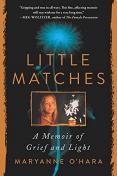

Little Matches: A Memoir of Grief and Light
by Maryanne O'Hara
Hardcover : 368 pages
2 clubs reading this now
0 members have read this book
When their only child ...
Introduction
In the vein of The Year of Magical Thinking and Beautiful Boy, an emotionally raw and inspiring memoir that illuminates a mother’s grief over the loss of her adult child and considers the hope of soulful connections that transcend the boundary of life and death.
When their only child was diagnosed with cystic fibrosis (CF) at the age of two, Maryanne O’Hara and her husband were told that Caitlin could live a long life or be dead in a matter of months. Thirty-one years later, Caitlin lost her battle with this devastating disease following an excruciating two-year wait on the transplant list and a last-minute race to locate a pair of healthy lungs.
The sudden spiral of events left Maryanne in an existential crisis, searching to find an answer to the eternal question: Why we are here? During her final years, Caitlin had become a source of wisdom and comfort for her mother—the partner with whom she shared a deep spiritual quest to understand what it meant to have a soul. After Caitlin’s passing, Maryanne began to notice signs—poignant, persistent synchronicities that seemed to lean toward proof of Caitlin’s enduring presence.
Weaving together a series of interconnected meditations with illuminating glimpses of life rendered via text messages, e-mails, and journal entries, Little Matches is a profound reflection on life and death, motherhood, the pain of chronic uncertainty, and finding inspiration in the unexpected sparks that light our way through the darkness.
Editorial Review
No Editorial Review Currently AvailableDiscussion Questions
1. As you read through Maryanne’s process of grieving Caitlin, were you reminded of expe- riences you’ve had with grief and mourning in your own life? How can acknowledging these experiences help shed light on the similarities we share as humans in relation to loss, love, death—life? ?2. What is the author alluding to when she writes, “There has been so much knowing”? In what way is this type of “knowing” unique to how we typically understand what it means to “know”? Discuss some examples of these “knowings” detailed by Maryanne in chapter one. ?
3. Despite the difficulties imposed by her declining health, Caitlin was determined to live life as normally as she could. List a few examples of the type of normalcy she strived for that a healthy person often takes for granted. In what ways does Caitlin inspire in the reader a deeper gratitude for life? ?
4. Referring to Caitlin’s outwardly healthy-looking self, Maryanne reflects, “Even now, I have to remind myself: Don’t be quick to judge people. So much that we humans suffer with is invisible.” Think of a time when you’ve been misunderstood because of some invisible challenge. Have you ever similarly misjudged another per- son? Discuss.
5. Uncertainty dominates the story of the wait for Caitlin’s transplant. Maryanne includes notes that Caitlin wrote to herself as encouragement when hoping was hard. What might you write to yourself to keep you going through a time of hardship? What advice do you think Caitlin might give to you?
6. On page 119, the author writes, “The world could seem random in its cruelty, but was it? Or were these life lessons these (two) souls had laid out ahead of time...?” Discuss these questions and what you hope the answers
to them might be. What are examples of “blessings in disguise” in your life that would encourage you to believe that certain things happen for a reason—even if that reason remains unknown?
7. “THE MIRACLE OF HUMAN BEINGS IS THAT WE ARE ALL ABLE TO GO ON LIVING DESPITE THE CERTAINTY THAT WE WILL DIE,” says Caitlin to Jess on page 143. What is your first reaction to this statement of Caitlin’s? What keeps you carrying on? How can an awareness and acknowledgement of life’s impermanence serve instead of frightening us?
8. Throughout the wait for transplant, Maryanne notices persistent synchronic- ities, like the repeating number 4 and the white hawks. List a few other synchronicities Maryanne noticed, especially after Caitlin’s passing. Have you experienced similar phe- nomena? How do you account for them? ?
9. Re-read the description of Caitlin’s Andy Warhol screen test clip, given by Maryanne on page 221. Which detail stands out to you, and why? Do you think Caitlin was trying to send a message with this clip, or was it a coincidence? ?
10. During Maryanne’s mediumistic session with Karissa, Caitlin seems to come through with the message, “Faith is a choice.” Do you believe that to be true? Why, or why not? Discuss why you think it may have been difficult for Maryanne to trust the signs and messages Caitlin seemed to be sending, despite feeling desperate for them as well. What do you think Karissa means when she says, “Caitlin’s ready. It’s our grief that gets in the way,” on page 266?
11. Clutching her phone in gratitude for its abil- ity to give her a few “living moments” with her late daughter, Maryanne thinks about how much more difficult the grieving pro- cess must have been for people before the availability of smartphones and technology. In what other ways has grieving changed— or remained the same—through the ages? How have newer features of society, like social media, influenced how we keep our departed loved ones close?
12. Think of the questions you wish you had answers to. What are the “little matches” that spark your own “knowing?” How does acknowledging “knowing” deepen your relationship with the world around you? What are your own examples of experiencing how “grief seeks light?”
Book Club Recommendations
Recommended to book clubs by 0 of 0 members.
Book Club HQ to over 90,000+ book clubs and ready to welcome yours.
Get free weekly updates on top club picks, book giveaways, author events and more