




BKMT READING GUIDES
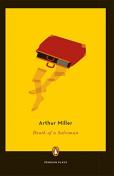

Death of a Salesman (Penguin Plays)
by Arthur Miller
Paperback : 139 pages
1 club reading this now
0 members have read this book
Ever since it was first performed in 1949, Death of a Salesman has been recognized as a milestone of the American theater. In the person of Willy Loman, the aging, failing salesman who makes his living riding on ...
Introduction
The Pulitzer Prize-winning tragedy of a salesman’s deferred American dream
Ever since it was first performed in 1949, Death of a Salesman has been recognized as a milestone of the American theater. In the person of Willy Loman, the aging, failing salesman who makes his living riding on a smile and a shoeshine, Arthur Miller redefined the tragic hero as a man whose dreams are at once insupportably vast and dangerously insubstantial. He has given us a figure whose name has become a symbol for a kind of majestic grandiosity—and a play that compresses epic extremes of humor and anguish, promise and loss, between the four walls of an American living room.
"By common consent, this is one of the finest dramas in the whole range of the American theater." —Brooks Atkinson, The New York Times
"So simple, central, and terrible that the run of playwrights would neither care nor dare to attempt it." —Time
Editorial Review
Arthur Miller's 1949 Death of a Salesman has sold 11 million copies, and Willy Loman didn't make all those sales on a smile and a shoeshine. This play is the genuine article--it's got the goods on the human condition, all packed into a day in the life of one self-deluded, self-promoting, self-defeating soul. It's a sturdy bridge between kitchen-sink realism and spectral abstraction, the facts of particular hard times and universal themes. As Christopher Bigsby's mildly interesting afterword in this 50th-anniversary edition points out (as does Miller in his memoir, Timebends), Willy is closely based on the playwright's sad, absurd salesman uncle, Manny. But of course Miller made Manny into Everyman, and gave him the name of the crime commissioner Lohmann in Fritz Lang's angst-ridden 1932 Nazi parable, The Testament of Dr. Mabuse.The tragedy of Loman the all-American dreamer and loser works eternally, on the page as on the stage. A lot of plays made history around 1949, but none have stepped out of history into the classic canon as Salesman has. Great as it was, Tennessee Williams's work can't be revived as vividly as this play still is, all over the world. (This edition has edifying pictures of Lee J. Cobb's 1949 and Brian Dennehy's 1999 performances.) It connects Aristotle, The Great Gatsby, On the Waterfront, David Mamet, and the archetypal American movie antihero. It even transcends its author's tragic flaw of pious preachiness (which undoes his snoozy The Crucible, unfortunately his most-produced play).
No doubt you've seen Willy Loman's story at least once. It's still worth reading. --Tim Appelo
Discussion Questions
No discussion questions at this time.Book Club Recommendations
Recommended to book clubs by 0 of 0 members.
Book Club HQ to over 90,000+ book clubs and ready to welcome yours.
Get free weekly updates on top club picks, book giveaways, author events and more