




BKMT READING GUIDES
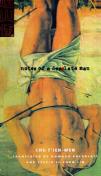

Notes of a Desolate Man
by Chu T'ien-wen, Howard Goldblatt, Sylvia Lichun Lin, Sylvia Li-Chun Lin
Paperback : 184 pages
0 club reading this now
0 members have read this book
The narrator, Xiao Shao, recollects a series of friends and ...
Introduction
Winner of the coveted China Times Novel Prize, this postmodern, first-person tale of a contemporary Taiwanese gay man reflecting on his life, loves, and intellectual influences is among the most important recent novels in Taiwan.
The narrator, Xiao Shao, recollects a series of friends and lovers, as he watches his childhood friend, Ah Yao, succumb to complications from AIDS. The brute fact of Ah Yao's death focuses Shao's simultaneously erudite and erotic reflections magnetically on the core theme of mortality. By turns humorous and despondent, the narrator struggles to come to terms with Ah Yao's risky lifestyle, radical political activism, and eventual death; the fragility of romantic love; the awesome power of eros; the solace of writing; the cold ennui of a younger generation enthralled only by video games; and life on the edge of mainstream Taiwanese society. His feverish journey through forests of metaphor and allusion?from Fellini and Lévi-Strauss to classical Chinese poetry?serves as a litany protecting him from the ravages of time and finitude.
Impressive in scope and detail, Notes of a Desolate Man employs the motif of its characters' marginalized sexuality to highlight Taiwan's vivid and fragile existence on the periphery of mainland China. Howard Goldblatt and Sylvia Li-chun Lin's masterful translation brings Chu T'ien-wen's lyrical and inventive pastiche of political, poetic, and sexual desire to the English-speaking world.
Editorial Review
"I am a sick man ... I am a spiteful man," cries the narrator of Dostoyevsky's Notes from the Underground. The narrator of Chu Tien-Wen's Notes of a Desolate Man might amend that to "I am not a sick man ... but I am by no means well." Xiao Shao has reached the age of 40 only to feel that his life has run its course. His close childhood friend has recently succumbed to AIDS, and while he remains "unbelievably, amazingly" free from infection, Ah Yao's death has sent him spiraling into depression. Like Dostoyevsky's hero, Xiao suffers from a profound alienation--as a Chinese deeply engaged with Western thought, as a gay man still coming to terms with his sexuality, and, by extension, as a Taiwanese citizen both cut off from and bound to the mainland. T'ien-Wen's narrative intercuts his reflections on the nature of desire with ruminations on culture both high and low--from Fellini and Goethe to Michael Jackson and Barbra Streisand. The result is a remarkable chronicle of life on the artistic, political, and sexual margins. A 1994 winner of the China Times Novel Prize, this dense, intelligent, deliberately paced novel is no less insightful for having been written not by a gay man, but by a woman: an author of 15 previous books and one of Taiwan's leading intellectuals. Her convincing account of Xiao's inner life is a testament to the powers of the creative imagination to transcend difference. --Chloe ByrneDiscussion Questions
No discussion questions at this time.Book Club Recommendations
Recommended to book clubs by 0 of 0 members.
Book Club HQ to over 90,000+ book clubs and ready to welcome yours.
Get free weekly updates on top club picks, book giveaways, author events and more