




BKMT READING GUIDES
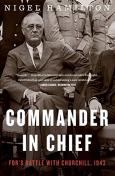

Commander in Chief: FDR's Battle with Churchill, 1943 (FDR at War)
by Nigel Hamilton
Published: 2017-05-16
Paperback : 496 pages
Paperback : 496 pages
0 members reading this now
0 club reading this now
0 members have read this book
0 club reading this now
0 members have read this book
“Superb . . . Hamilton brilliantly sets out Roosevelt’s foresight, determination and skill in establishing a new world order.” —Fareed Zakaria, Washington Post
“Provocative . . . stimulating to follow.” —Thomas E. Ricks, New York Times Book Review
1943 was the year of Allied ...
“Provocative . . . stimulating to follow.” —Thomas E. Ricks, New York Times Book Review
1943 was the year of Allied ...
No other editions available.
Jump to
Introduction
“Superb . . . Hamilton brilliantly sets out Roosevelt’s foresight, determination and skill in establishing a new world order.” —Fareed Zakaria, Washington Post
“Provocative . . . stimulating to follow.” —Thomas E. Ricks, New York Times Book Review
1943 was the year of Allied military counteroffensives, beating back the forces of the Axis powers in North Africa and the Pacific—the “Hinge of Fate,” as Winston Churchill called it. In Commander in Chief Nigel Hamilton reveals FDR’s true role in this saga: overruling his own Joint Chiefs of Staff, ordering American airmen on an ambush of the Japanese navy’s Admiral Yamamoto, facing down Churchill when he attempted to abandon Allied D-day strategy (twice). This FDR is profoundly different from the one Churchill later painted. President Roosevelt’s patience was tested to the limit quelling the Prime Minister’s “revolt,” as Churchill pressured Congress and senior American leaders to focus Allied energy on disastrous fighting in Italy and the Aegean instead of landings in Normandy. Finally, in a dramatic showdown at Hyde Park, FDR had to stop Churchill from losing the war by making the ultimate threat, setting the Allies on their course to final victory.
In Commander in Chief, Hamilton masterfully chronicles the clash of nations—and of two titanic personalities—at a crucial moment in modern history.
“The rebuttal to the Churchill multivolume history . . . The war retains its power to shock and surprise.” — Boston Globe
“Provocative . . . stimulating to follow.” —Thomas E. Ricks, New York Times Book Review
1943 was the year of Allied military counteroffensives, beating back the forces of the Axis powers in North Africa and the Pacific—the “Hinge of Fate,” as Winston Churchill called it. In Commander in Chief Nigel Hamilton reveals FDR’s true role in this saga: overruling his own Joint Chiefs of Staff, ordering American airmen on an ambush of the Japanese navy’s Admiral Yamamoto, facing down Churchill when he attempted to abandon Allied D-day strategy (twice). This FDR is profoundly different from the one Churchill later painted. President Roosevelt’s patience was tested to the limit quelling the Prime Minister’s “revolt,” as Churchill pressured Congress and senior American leaders to focus Allied energy on disastrous fighting in Italy and the Aegean instead of landings in Normandy. Finally, in a dramatic showdown at Hyde Park, FDR had to stop Churchill from losing the war by making the ultimate threat, setting the Allies on their course to final victory.
In Commander in Chief, Hamilton masterfully chronicles the clash of nations—and of two titanic personalities—at a crucial moment in modern history.
“The rebuttal to the Churchill multivolume history . . . The war retains its power to shock and surprise.” — Boston Globe
Discussion Questions
No discussion questions at this time.Book Club Recommendations
Recommended to book clubs by 0 of 0 members.
MEMBER LOGIN
BECOME A MEMBER it's free
Book Club HQ to over 90,000+ book clubs and ready to welcome yours.
SEARCH OUR READING GUIDES
Search
FEATURED EVENTS
PAST AUTHOR CHATS
JOIN OUR MAILING LIST
Get free weekly updates on top club picks, book giveaways, author events and more
Get free weekly updates on top club picks, book giveaways, author events and more



Please wait...
