




BKMT READING GUIDES
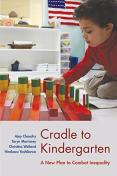

Cradle to Kindergarten: A New Plan to Combat Inequality
by Ajay Chaudry, Taryn Morrissey, Christina Weiland, Hirokazu Yoshikawa
Published: 2017-02-17
Paperback : 240 pages
Paperback : 240 pages
0 members reading this now
1 club reading this now
0 members have read this book
1 club reading this now
0 members have read this book
Early care and education for many children in the United States is in crisis. The period between birth and kindergarten is a critical time for child development, and socioeconomic disparities that begin early in children’s lives contribute to starkly different long-term outcomes for ...
No other editions available.
Jump to
Introduction
Early care and education for many children in the United States is in crisis. The period between birth and kindergarten is a critical time for child development, and socioeconomic disparities that begin early in children’s lives contribute to starkly different long-term outcomes for adults. Yet, compared to other advanced economies, high-quality child care and preschool in the United States are scarce and prohibitively expensive for many middle-class and most disadvantaged families. To what extent can early-life interventions provide these children with the opportunities that their affluent peers enjoy and contribute to reduced social inequality in the long term? Cradle to Kindergarten offers a comprehensive, evidence-based strategy that diagnoses the obstacles to accessible early education and charts a path to opportunity for all children.
The U.S. government invests less in children under the age of five than do most other developed nations. Most working families must seek private childcare, which means that children from low-income households, who would benefit most from high-quality early education, are the least likely to attend them. Existing policies, such as pre-kindergarten in some states are only partial solutions. To address these deficiencies, the authors propose to overhaul the early care system, beginning with a federal paid parental leave policy that provides both mothers and fathers with time and financial support after the birth of a child. They also advocate increased public benefits, including an expansion of the child care tax credit, and a new child care assurance program that subsidizes the cost of early care for low- and moderate-income families. They also propose that universal, high-quality early education in the states should start by age three, and a reform of the Head Start program that would include more intensive services for families living in areas of concentrated poverty and experiencing multiple adversities from the earliest point in these most disadvantaged children’s lives. They conclude with an implementation plan and contend that these reforms are attainable within a ten-year timeline.
Reducing educational and economic inequalities requires that all children have robust opportunities to learn, fully develop their capacities, and have a fair shot at success. Cradle to Kindergarten presents a blueprint for fulfilling this promise by expanding access to educational and financial resources at a critical stage of child development.
The U.S. government invests less in children under the age of five than do most other developed nations. Most working families must seek private childcare, which means that children from low-income households, who would benefit most from high-quality early education, are the least likely to attend them. Existing policies, such as pre-kindergarten in some states are only partial solutions. To address these deficiencies, the authors propose to overhaul the early care system, beginning with a federal paid parental leave policy that provides both mothers and fathers with time and financial support after the birth of a child. They also advocate increased public benefits, including an expansion of the child care tax credit, and a new child care assurance program that subsidizes the cost of early care for low- and moderate-income families. They also propose that universal, high-quality early education in the states should start by age three, and a reform of the Head Start program that would include more intensive services for families living in areas of concentrated poverty and experiencing multiple adversities from the earliest point in these most disadvantaged children’s lives. They conclude with an implementation plan and contend that these reforms are attainable within a ten-year timeline.
Reducing educational and economic inequalities requires that all children have robust opportunities to learn, fully develop their capacities, and have a fair shot at success. Cradle to Kindergarten presents a blueprint for fulfilling this promise by expanding access to educational and financial resources at a critical stage of child development.
Discussion Questions
No discussion questions at this time.Book Club Recommendations
Recommended to book clubs by 0 of 0 members.
MEMBER LOGIN
BECOME A MEMBER it's free
Book Club HQ to over 90,000+ book clubs and ready to welcome yours.
SEARCH OUR READING GUIDES
Search
FEATURED EVENTS
PAST AUTHOR CHATS
JOIN OUR MAILING LIST
Get free weekly updates on top club picks, book giveaways, author events and more
Get free weekly updates on top club picks, book giveaways, author events and more



Please wait...
