




BKMT READING GUIDES
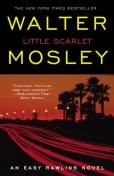

Little Scarlet
by Walter Mosley
Paperback : 0 pages
1 club reading this now
0 members have read this book
At the height of the riots that cripple LA in the summer of 1965, a white man is ...
Introduction
Walter Mosley delivers at last the compelling master work everyone's been waiting for--a novel so intriguing, so soulful, so unstoppably dramatic that it will rank among the classic mysteries of our time.
At the height of the riots that cripple LA in the summer of 1965, a white man is pulled from his car by a mob and escapes into a nearby apartment building. Soon afterward, a red-headed woman known as Little Scarlet is found dead in that apartment building--and the fleeing man is the obvious suspect. The police ask Easy Rawlins to investigate. What he finds is a killer whose rage, like that which burned the city for weeks, is intrinsically woven around race and passion. Rawlins's hunt for the killer will reveal a new city emerging from the ashes--and a new life for Easy and his friends.
Mosley's lean and muscular vernacular captures the heat and the rhythm of Los Angeles' heart, where danger is the common currency of everyday life.
Editorial Review
Los Angeles, 1965, right after the Watts Riots, six summer days of racial violence--burning, looting, and killing--that followed the routine arrest of a black motorist for drunken driving. Although custodian and unlicensed PI Ezekiel "Easy" Rawlins stayed safely inside during the turmoil, as an African-American male he understands all too well what it was about. "It's hot and people are mad," he explains in Walter Mosley's Little Scarlet. "They’ve been mad since they were babies." Even with the rioting finally cooled, police remain on edge. So when a mid-30s, redheaded black woman named Nola Payne--aka "Little Scarlet"--turns up dead in her apartment, strangled and shot and showing signs of recent sexual contact, the cops are reluctant to storm L.A.'s minority community, looking for her murderer, especially since the culprit may well be an injured white man Payne had sheltered, and who's now disappeared. Instead, they ask Easy to see what he can find out about this crime.The case forces Rawlins to address the ethnic tribulations of 1960s America, in microcosm, and his own discomfort with discrimination, in particular.
I spent my whole early life at the back of buses and in the segregated balconies at theaters. I had been arrested for walking in the wrong part of town and threatened for looking a man in the eye. And when I went to war to fight for freedom, I found myself in a segregated army, treated with less respect than they treated German POWs. I had seen people who looked like me jeered on TV and in the movies. I had had enough and I wasn't about to turn back, even though I wanted to.
But Easy can't tackle this investigation alone; assisting him are the casually homicidal Raymond "Mouse" Alexander, as well as a dogged white detective and a fetching younger woman, who threatens to overturn the settled life Easy has been working toward all these years. Nor can Rawlins wrap the case up easily. Harassed and attacked for his inquiries, he eventually connects Payne's slaying to a homeless man, allegedly responsible for killing as many as 21 black women, all of whom had the bad judgment to hook up with white men.
Little Scarlet, the eighth Rawlins novel (after Bad Boy Brawly Brown), is unusual for Mosley, because it focuses as much on the credible mechanics of crime-solving as it does on the exposition of character and the exploration of L.A.'s mid-20th-century black culture. Combined with the author's vigorous prose and prowess with dialogue, Easy's promotion to serious sleuth promises great things for what was already a standout series. --J. Kingston Pierce
Discussion Questions
No discussion questions at this time.Book Club Recommendations
Recommended to book clubs by 0 of 0 members.
Book Club HQ to over 90,000+ book clubs and ready to welcome yours.
Get free weekly updates on top club picks, book giveaways, author events and more